
Lion Broke the Glass Cage And Attack the Woman in Zoo: Real or Fake Viral Clip?
Author: De-Reviews.com Team
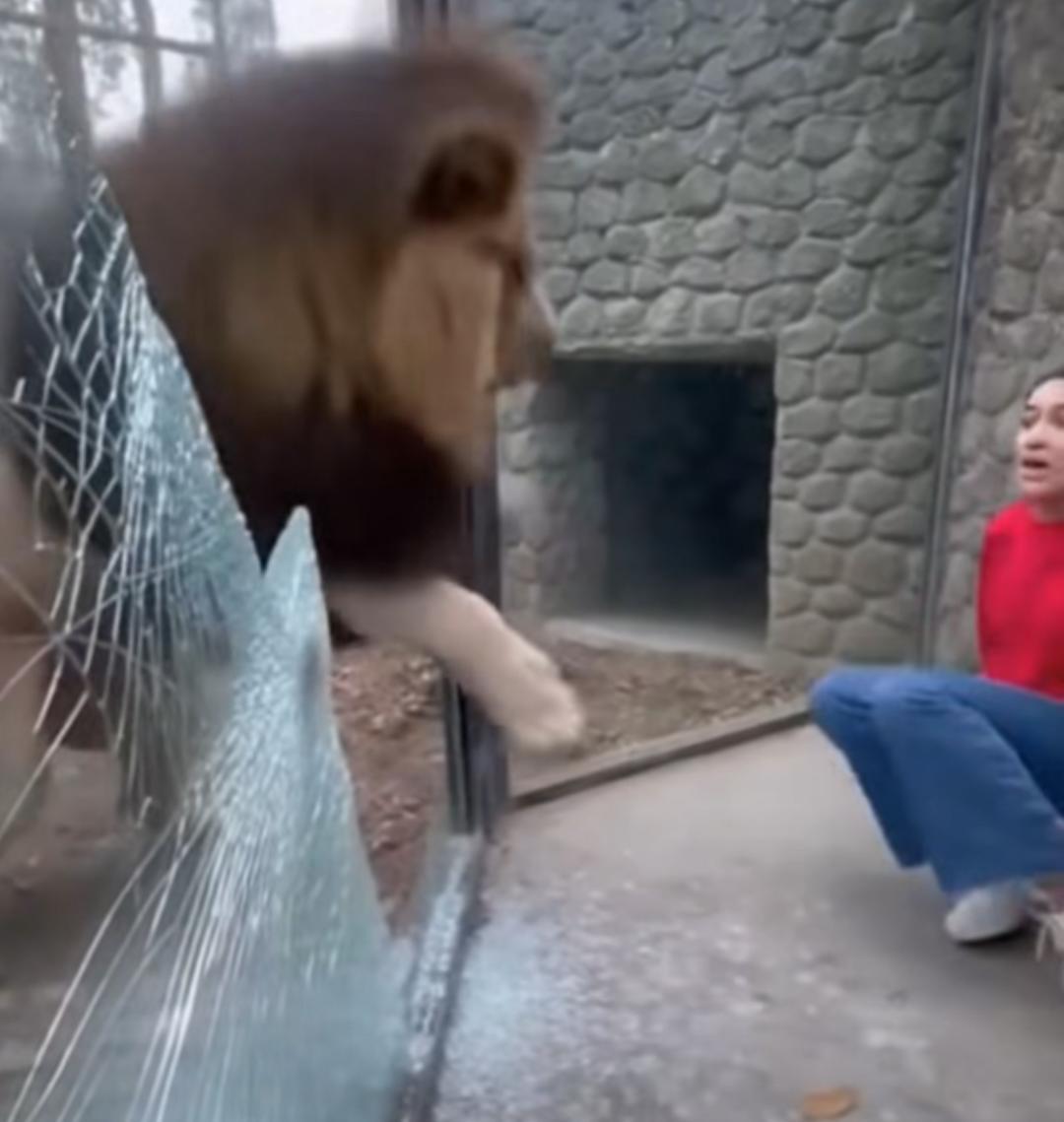
A video circulating on social media has caught the attention of viewers globally, showing a lion breaking out of a glass cage and attacking a woman in a zoo. The clip is dramatic and alarming, with the lion shattering the glass and lunging toward the woman. Within hours of being posted, the footage went viral, sparking concern over zoo safety and the possibility of such incidents happening in public spaces.
About the Video:
At first glance, the video looks realistic. The lion’s movements, the glass breaking, and the woman’s reaction when being attacked by the lion, all seem intense. Many viewers considered this as a real emergency situation happened in a zoo. However, upon closer inspection of the video, multiple inconsistencies in the video can be found that raise serious questions about its authenticity.
Fact Checking:
Let’s break down what we found in the video:
Unnatural Camera Behavior:
One of the first signs that we notice in the video is the behavior of the camera. Throughout the entire clip, the camera remains unusually steady. In real life, a person witnessing a lion escaping from its enclosure would panic, drop the camera, or at least move erratically while trying to record. Their immediate focus would be on protecting themselves and helping the woman first. The calm and steady camera work is inconsistent with how a real human would react to a life threatening situation, suggesting footage may be digitally created or staged.
Source of the Video:
The Facebook account posting the video, LaughTrack, has a history of sharing multiple AI-generated contents. Many previous videos from this account show clear signs of being digitally created, which increases the likelihood that this particular clip is also digitally generated.
Audio and Visual Characteristics:
The video displays multiple audio and visual characteristics mostly linked with AI-generated content, especially videos made using tools like Sora AI. The sound, video texture, and visual effect resemble the video to be AI-generated, rather than real footage from a real incident.
Human anatomy glitches:
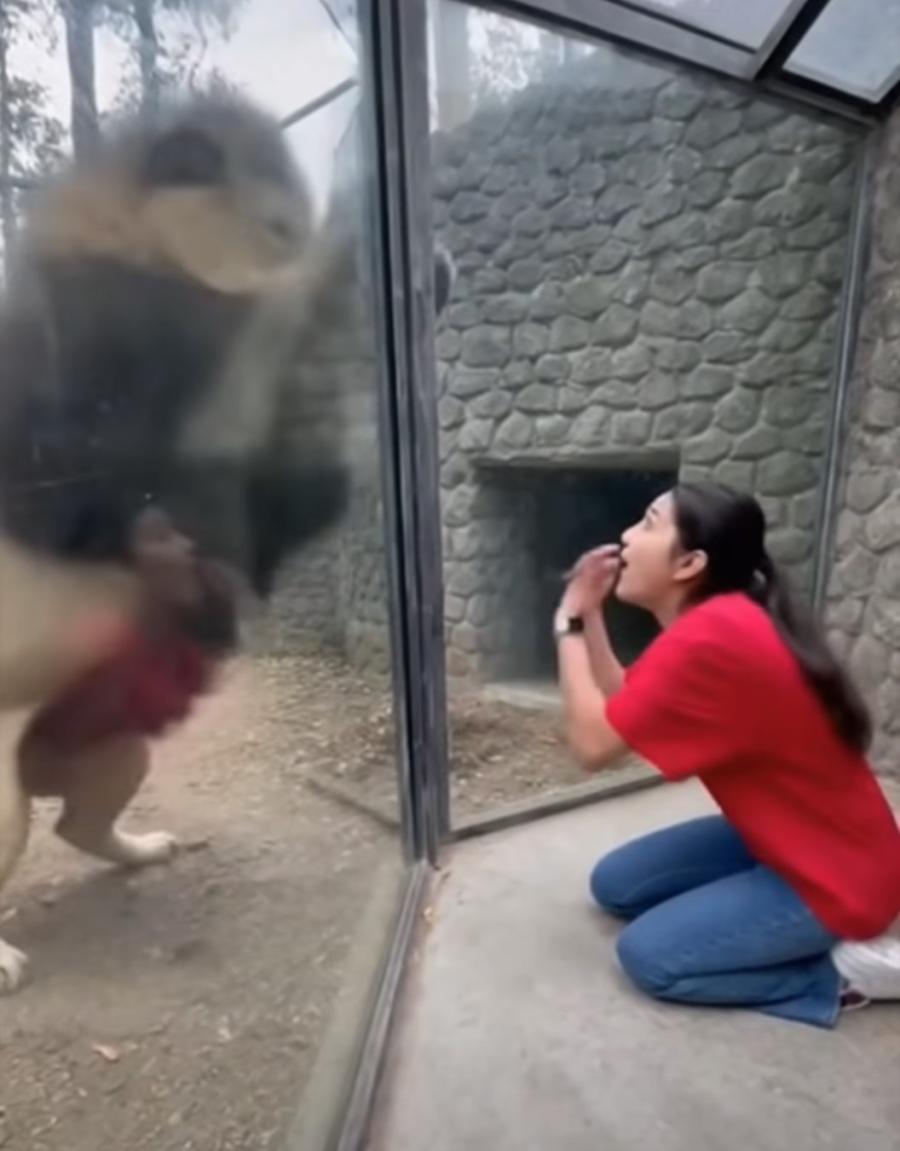
The woman’s hand appears distorted at one moment, with fingers merging or partially missing, a classic AI glitch.
Glass breaking:
The way the glass shatters does not align with real world physics, further indicating digital manipulation.
Overall blurriness:
The slightly blurred quality is typical of AI-generated videos, which often struggle with sharp, realistic textures during complex movements.
Unrealistic physical interactions:
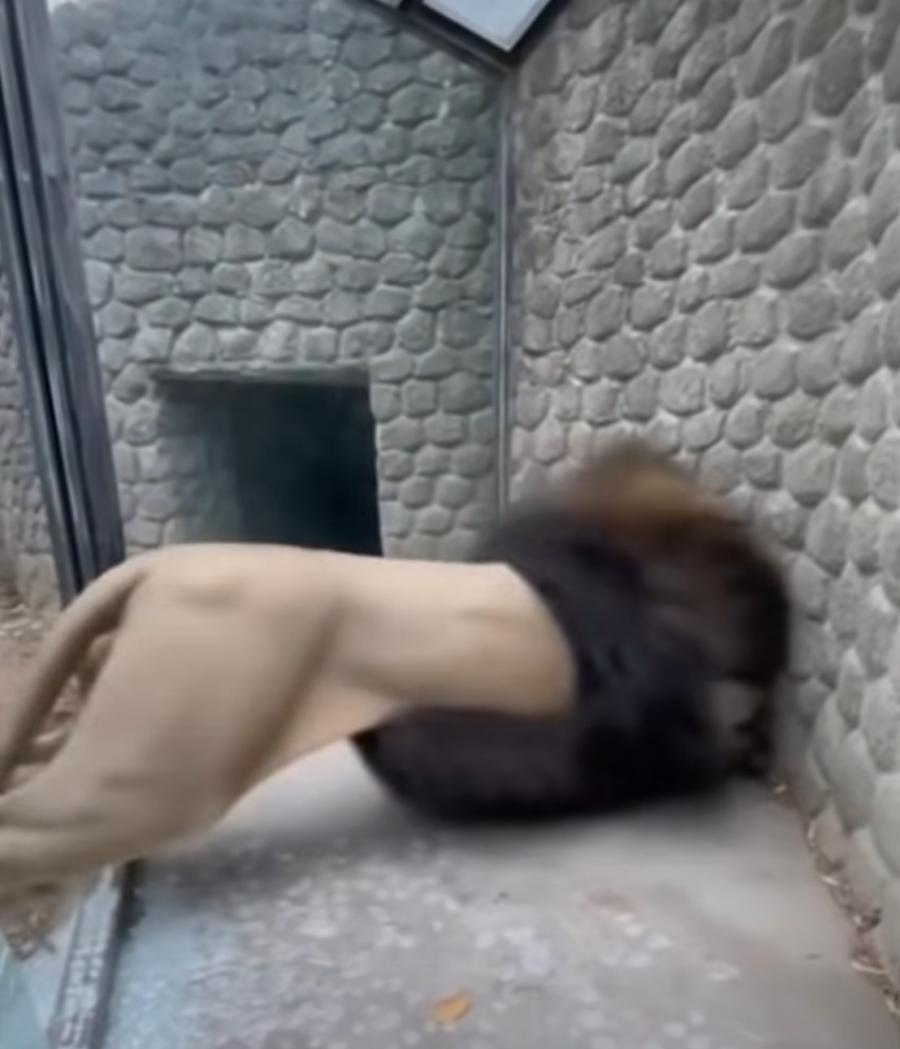
When the lion exits the glass cage and enters a hole in the stone wall, the wall appears to move unnaturally, almost like plastic, which is physically impossible for solid stone.
No Verified Real Life Incident:
Upon further investigation into 2025 incidents, we found no reports that match the video’s scenario. Although lions have caused dangerous accidents in zoos and wildlife parks, none broke a glass cage and attacked a visitor in a public area as shown in this video. The verified incidents we came across so far are:
- At Darling Downs Zoo in Queensland, Australia, a woman was injured and lost her arm after entering a restricted area with a lion, but no glass barrier was involved.
- At Safari World in Bangkok, Thailand, a zookeeper was tragically mauled by lions in an open lion zone, again without any glass being broken.
- Our search did not find any recent case where a lion broke a glass barrier and attacked a woman in a public zoo area.
No Verified Reports or Sources Confirm the Incident:
No official reports, reliable sources, or any zoo have confirmed when, where, or if this incident actually happened, which strongly suggests that the video is not real.
Final Verdict:
Considering all factors, the unusual camera steadiness, the unrealistic physics, visual glitches, no news from the reliable sources and absence of any verified real world incident, it is highly likely that this video was generated using AI tools such as Sora AI.
Although the clip looks dramatic and eye catching, it is a reminder for viewers to stay cautious with viral content. Checking sources and looking for unusual video behavior, unrealistic physics, or distorted anatomy can help prevent the spread of misinformation and unnecessary panic from digitally created videos.
Report a Scam!

Have you fallen for a hoax, bought a fake product? Report the site and warn others!
Scam Categories
Help & Info
Top Safety Picks
Your Go-To Tools for Online SafetyDisclaimer: Some of the links here are affiliate links. If you click them and make a purchase, we may earn a commission at no extra cost to you.
- ScamAdviser App - iOS : Your personal scam detector, on the go! Check website safety, report scams, and get instant alerts. Available on iOS
- ScamAdviser App - Android : Your personal scam detector, on the go! Check website safety, report scams, and get instant alerts. Available on Android.
- NordVPN : NordVPN keeps your connection private and secure whether you are at home, traveling, or streaming from another country. It protects your data, blocks unwanted ads and trackers, and helps you access your paid subscriptions anywhere. Try it Today!
- Incogni : Incogni automatically removes your personal data from data brokers that trade in personal information online, helping reduce scam and identity theft risks without the hassle of manual opt-outs. Reclaim your privacy now!
Popular Stories
As the influence of the internet rises, so does the prevalence of online scams. There are fraudsters making all kinds of claims to trap victims online - from fake investment opportunities to online stores - and the internet allows them to operate from any part of the world with anonymity. The ability to spot online scams is an important skill to have as the virtual world is increasingly becoming a part of every facet of our lives. The below tips will help you identify the signs which can indicate that a website could be a scam. Common Sense: Too Good To Be True When looking for goods online, a great deal can be very enticing. A Gucci bag or a new iPhone for half the price? Who wouldn’t want to grab such a deal? Scammers know this too and try to take advantage of the fact. If an online deal looks too good to be true, think twice and double-check things. The easiest way to do this is to simply check out the same product at competing websites (that you trust). If the difference in prices is huge, it might be better to double-check the rest of the website. Check Out the Social Media Links Social media is a core part of ecommerce businesses these days and consumers often expect online shops to have a social media presence. Scammers know this and often insert logos of social media sites on their websites. Scratching beneath the surface often reveals this fu
How do I recover my crypto after it’s stolen? What happens if your crypto wallet is compromised? Can stolen crypto be traced, and can police actually recover crypto in 2026? These are the questions most people ask within minutes of realizing their wallet has been drained. Crypto theft is fast, quiet, and unforgiving. By the time most victims notice something is wrong, the funds are already moving across the blockchain. Once seen as a problem for exchanges and whales, crypto theft now heavily affects everyday investors. Phishing links, fake support chats, wallet approval scams, SIM swaps, and malware attacks have become common. Knowing what recovery realistically looks like—and what it doesn’t—can prevent panic, bad decisions, and costly follow-up scams. In a Nutshell Crypto recovery is possible, but only in limited situations Blockchain transactions are irreversible, but stolen crypto can still be traced Speed and documentation matter more than optimism Police and exchanges play a bigger role than private recovery services Guaranteed recovery offers are almost always scams Is it Actually Possible to Recover Stolen Crypto? Yes, crypto recovery is possible, but only under specific conditions and rarely through direct action by the victim. Blockchain transactions are final by design. Once crypto is sent and confirmed, it cannot be reversed. There is no central authority, no chargeback process, and no technical “undo” button, even if the transaction was clearly fraudulent. This is where many people ask whether stolen crypto can be traced. In most cases, it can. Every transaction