
Top 5 Phishing Scams: MetaMask, Verizon “Itemtracking”, AT&T “Bill Paid,” & Amazon Gift Card Giveaway
Author: Trend Micro
This article is from Trend Micro.
Phishing scams have for a long time been one of the scammer’s favorite tactics to trick you — in which (impersonating famous brands) they send out fake text messages and emails containing phishing links and aiming to entice you into opening the malicious links with various excuses and fake offers.
The phishing links lead to online survey pages that state you can claim a gift by completing an online questionnaire. After you fill out the survey, you are prompted to enter personal information, such as credit card numbers, before your “gift” can be delivered. In other instances, the links lead to fake log-in pages that seem to belong to various brands. These pages require you to submit log-in credentials to check package deliveries, change settings, or whatever other tasks they’ve prompted you to complete.
The scammers’ ultimate goal is to steal your information — they will record sensitive information you enter on these fake pages and use the data to commit cybercrimes: e.g., hack into your bank account, withdraw money, or steal your identity. Don’t let them!
1. Fake MetaMask Security Alert Email
Have you started your cryptocurrency investment? Many people have chosen MetaMask to make transactions, but please be careful and think twice every time before you click on any links and enter your log-in password. This week we’ve detected many fake MetaMask security alert emails that falsely claim your MetaMask wallet is going to be suspended for some security issue:
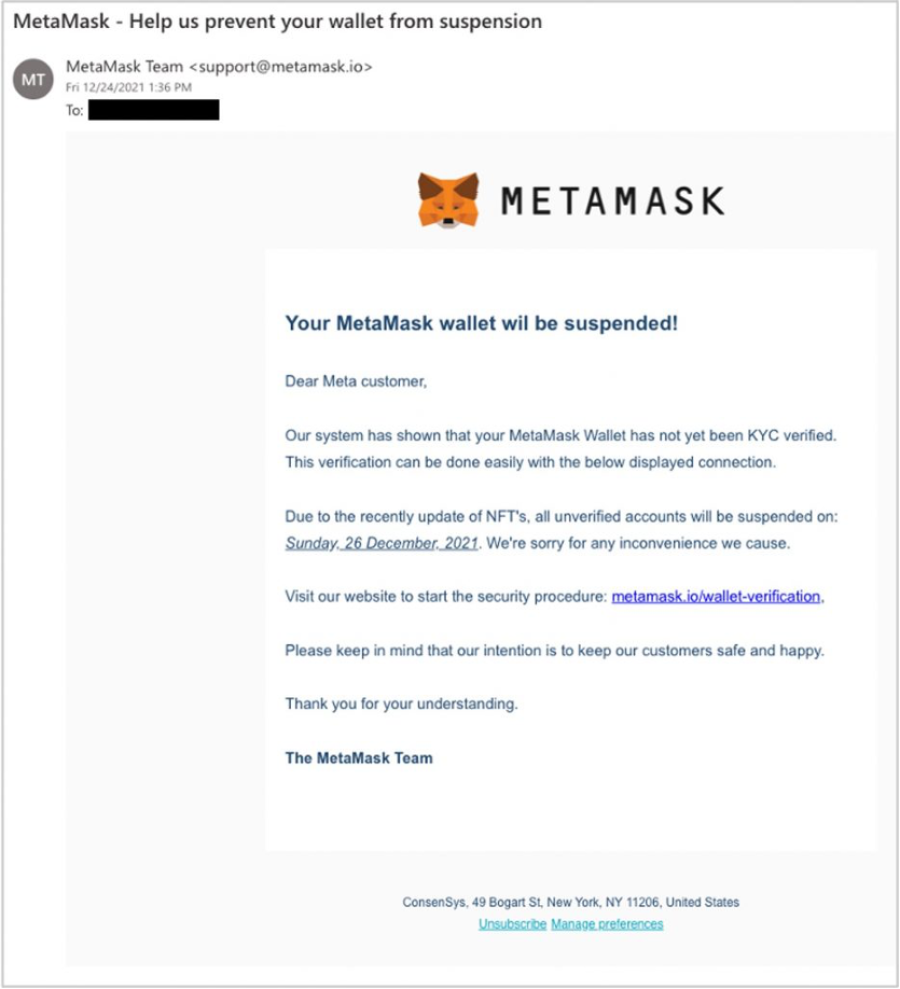
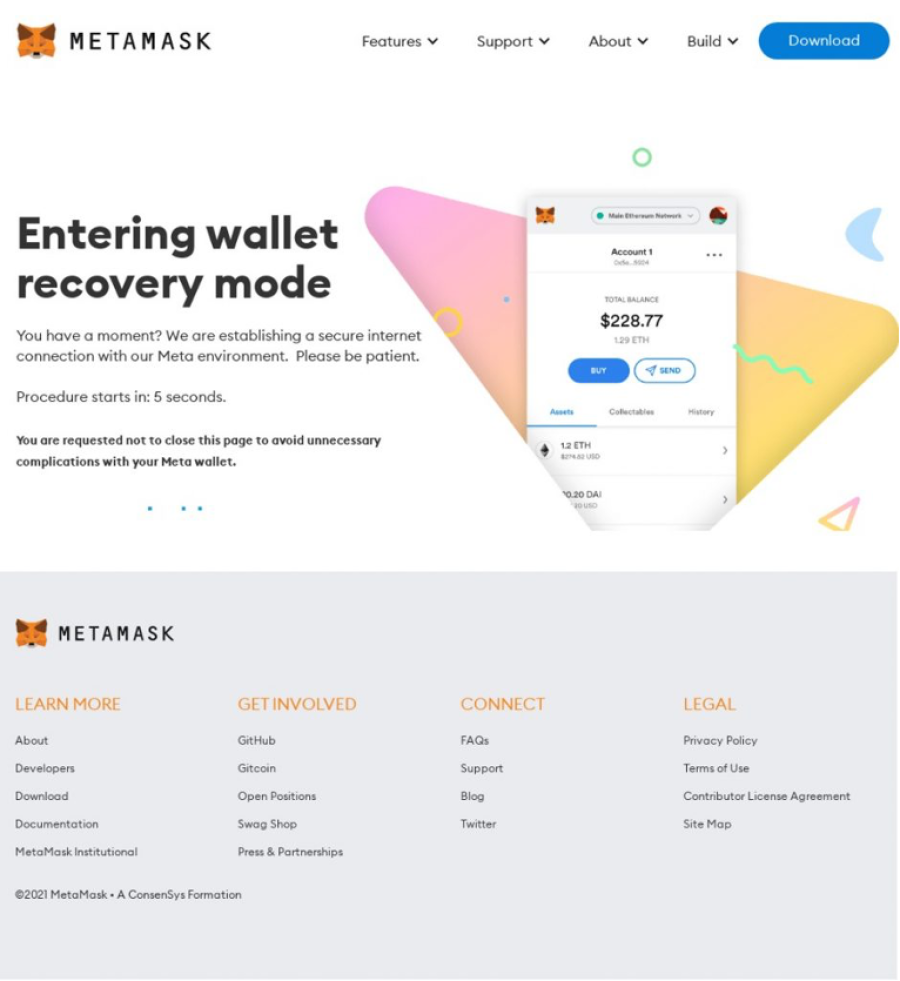
To retrieve your wallet, you are prompted to click on an embedded link in the email to verify your account. The link then takes you to a fake MetaMask website – again, if you submit credentials like a seed phrase, scammers can hack into your MetaMask wallet and transfer every “bit” away. What’s worse, since cryptocurrencies are decentralized, it would be nearly impossible to get them back! Watch out!
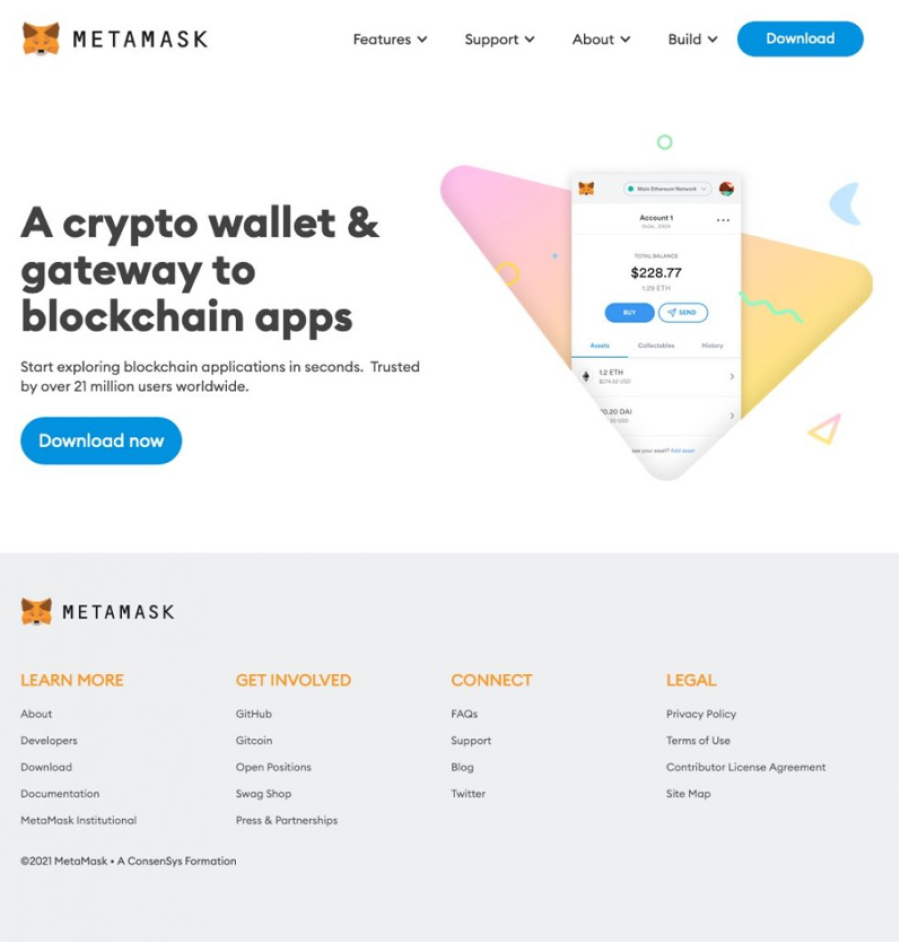
Note: the fake MetaMask website looks nearly 100% identical to the genuine one. Please take a look at the web address carefully – the legitimate domain of MetaMask should be metamask.io!
Real MetaMask Website:
You can use Trend Micro Check to check if a website is secure and browse the web safely: (It’s free!)
Trend Micro Check is an all-in-one browser extension for detecting scams, phishing attacks, malware, and dangerous links – and it’s FREE!
After you’ve pinned Trend Micro Check, it will block dangerous sites automatically! It is now available on Safari, Google Chrome, and Microsoft Edge.
Check out this page for more information on Trend Micro Check.
2. Verizon Parcel Tracking Scam (itemtracking[.]net)
We’ve reported on package delivery scams before, including DHL, FedEx, and USPS variants. This week there is a new version telling you to check the shipment address for your pending package:
- Parcel Tracking: Hi, your package with tracking code TX357Z46 is waiting for you to check the shipment address: <URL>
Source: News4JAX
The links in these fake text messages may vary, but most of them will direct you to itemtracking[.]net. This is a scam website, designed to look convincingly like Verizon’s official webpage, saying that you can win a gift (like a free iPad) if you fill out an online survey form and enter financial credentials – these will all end up in scammers’ hands!
3. Verizon “Bill Paid” Text Scam
Besides fake delivery messages, many people have also received ones that say you can get a gift via an attached link because you’ve paid your bill for November:
- VZN Free Msg: November bill is paid, Thanks, Here’s a little gift for you: <URL>
Source: Reddit
Again, the link is a phishing link. If you click on the button, you could end up exposing your personal information!
4. AT&T “Bill Paid” Survey Scam
There is an AT&T version of the “November bill paid” scam, and it is also reoccurring:
- ATT Free Msg: November bill is paid. Thanks, Here’s a little gift for you: <URL>
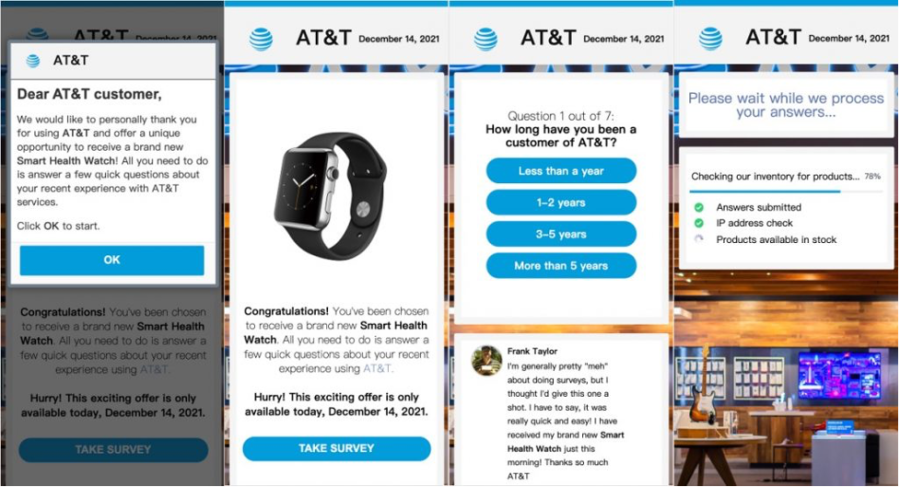
The attached link will take you to a fake AT&T online survey page that grants you a free Smart Health Watch:
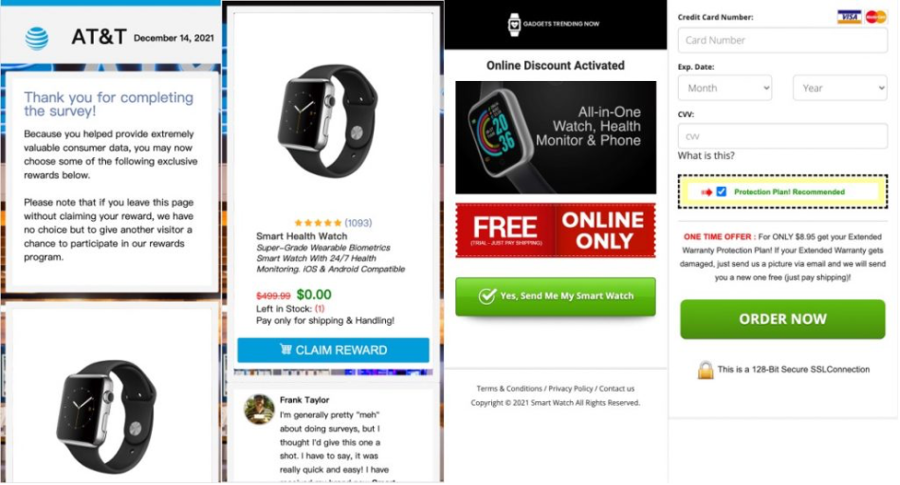
As mentioned above, you will be asked to enter credit card information. (Of course, don’t do so!)
5. Amazon Survey Scam
“Win a $1,000 gift card!” We’ve seen many gift card giveaway scams, and now they’ve come in as phishing text messages this week:
- Amazon Notification! Wayne! We’re offering a free credit for a Amazon $1,000 gift card today. ACT NOW: <URL>
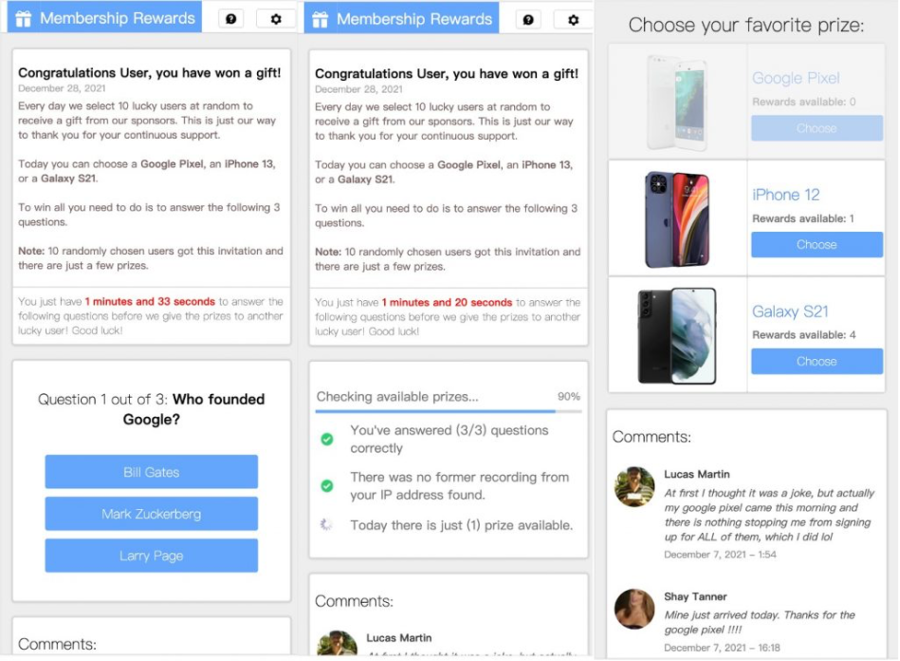
To claim the free gift card, you have to click on the phishing link and do an online survey:
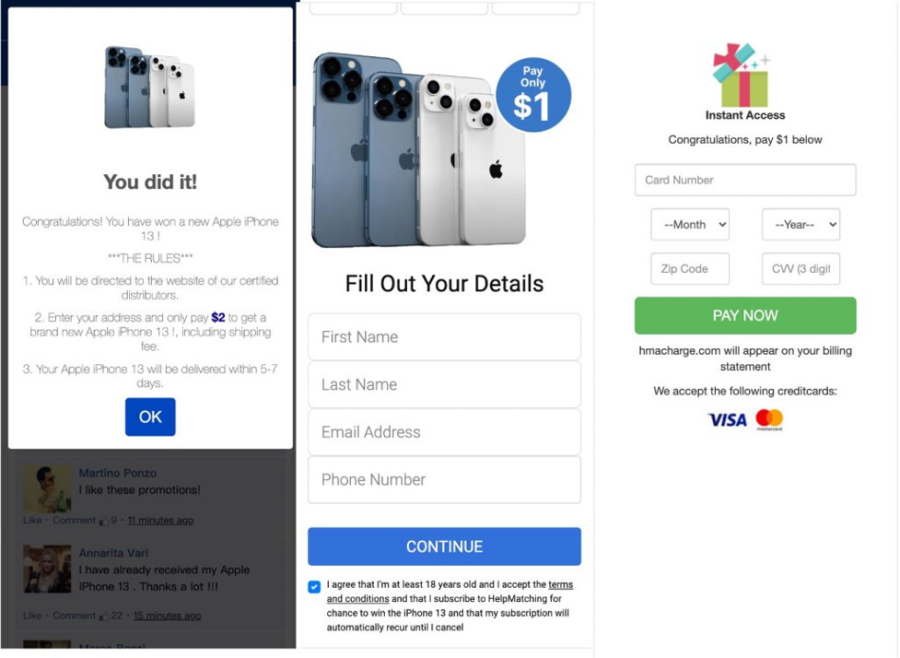
In the end, you are asked to enter credit card information for your reward – and you know what will happen: no gifts will ever appear, and your credentials will eventually arrive in a scammer’s pocket!
How to Protect Yourself
- Double-check the sender’s mobile number / email address.
- Free gifts or prizes are always a major red flag.
- Always go to the official website / application instead of using links from unknown sources.
- Browse the web safely with Trend Micro Check.
- Add an extra layer of protection to your device with Trend Micro Maximum Security. Its Web Threat Protection, Ransomware Protection, Anti-phishing, and Anti-spam Protection can help you combat scams and cyberattacks.
Click the button below to give it a try:
As ever, if you’ve found this article an interesting and/or helpful read, please do SHARE with friends and family to help keep the online community secure and protected.
Report a Scam!

Have you fallen for a hoax, bought a fake product? Report the site and warn others!
Scam Categories
Help & Info
Top Safety Picks
Your Go-To Tools for Online Safety
- ScamAdviser App - iOS : Your personal scam detector, on the go! Check website safety, report scams, and get instant alerts. Available on iOS
- ScamAdviser App - Android : Your personal scam detector, on the go! Check website safety, report scams, and get instant alerts. Available on Android.
- NordVPN : NordVPN keeps your connection private and secure whether you are at home, traveling, or streaming from another country. It protects your data, blocks unwanted ads and trackers, and helps you access your paid subscriptions anywhere. Try it Today!
Popular Stories
As the influence of the internet rises, so does the prevalence of online scams. There are fraudsters making all kinds of claims to trap victims online - from fake investment opportunities to online stores - and the internet allows them to operate from any part of the world with anonymity. The ability to spot online scams is an important skill to have as the virtual world is increasingly becoming a part of every facet of our lives. The below tips will help you identify the signs which can indicate that a website could be a scam. Common Sense: Too Good To Be True When looking for goods online, a great deal can be very enticing. A Gucci bag or a new iPhone for half the price? Who wouldn’t want to grab such a deal? Scammers know this too and try to take advantage of the fact. If an online deal looks too good to be true, think twice and double-check things. The easiest way to do this is to simply check out the same product at competing websites (that you trust). If the difference in prices is huge, it might be better to double-check the rest of the website. Check Out the Social Media Links Social media is a core part of ecommerce businesses these days and consumers often expect online shops to have a social media presence. Scammers know this and often insert logos of social media sites on their websites. Scratching beneath the surface often reveals this fu
Disclaimer: This article was originally published in 2018 and has been updated in October 2025 to reflect more current information, resources, and advice. Scams and recovery options continue to evolve, so always double-check with your bank, payment provider, or local consumer protection authority for the latest guidance. So the worst has come to pass - you realise you parted with your money too fast, and the site you used was a scam - what now? Well first of all, don’t despair!! If you think you have been scammed, the first port of call when having an issue is to simply ask for a refund. This is the first and easiest step to determine whether you are dealing with a genuine company or scammers. Sadly, getting your money back from a scammer is not as simple as just asking. If you are indeed dealing with scammers, the procedure (and chance) of getting your money back varies depending on the payment method you used. PayPal Debit card/Credit card Bank transfer Wire transfer Google Pay Bitcoin PayPal Good news: PayPal gives you strong protection. You can file a dispute within 180 days of your purchase. You can get a refund if: Your order never arrives, and the seller cannot provide proof of delivery. The scammer sends you something completely different (e.g., a controller instead of a PlayStation). The product condition was misrepresented (sold as new but arrives used). The item is missing undisclosed parts. The item is counterfeit. Start your claim directly through Pay