
£100 Starbucks Gift Card Scam or Legit?
Author: De-Reviews.com Team
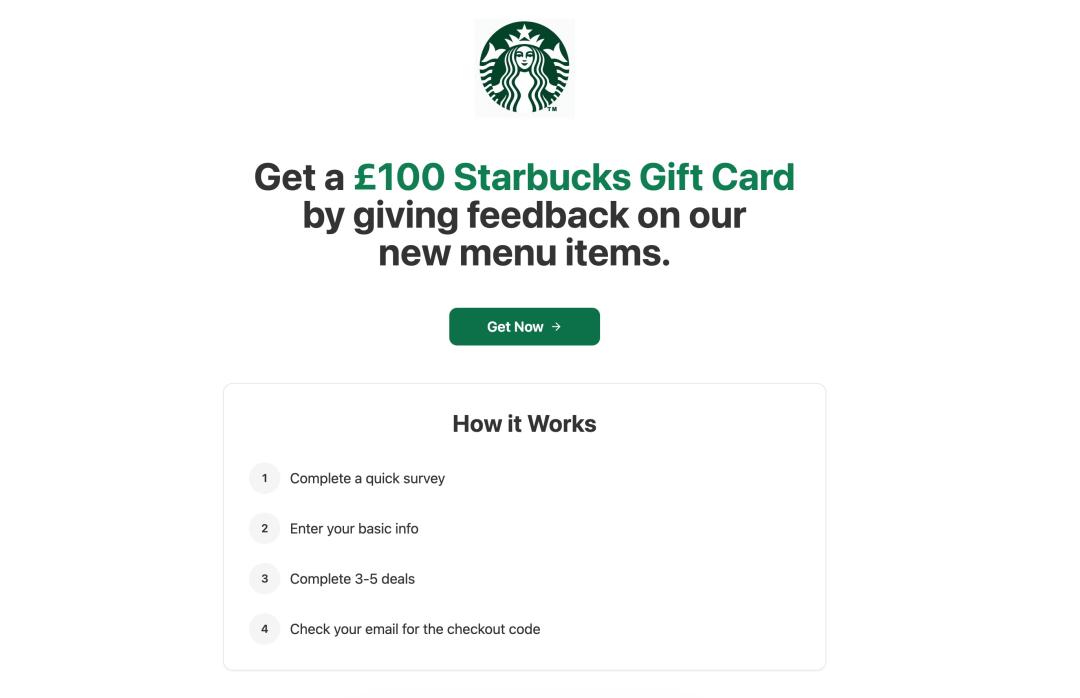
Many people online have recently come across posts claiming that Starbucks is giving away a $100 USD or £100 gift card in exchange for simple feedback on new menu items. It sounds tempting, but before jumping in, it’s important to understand what’s really going on.
What These Posts Claim?
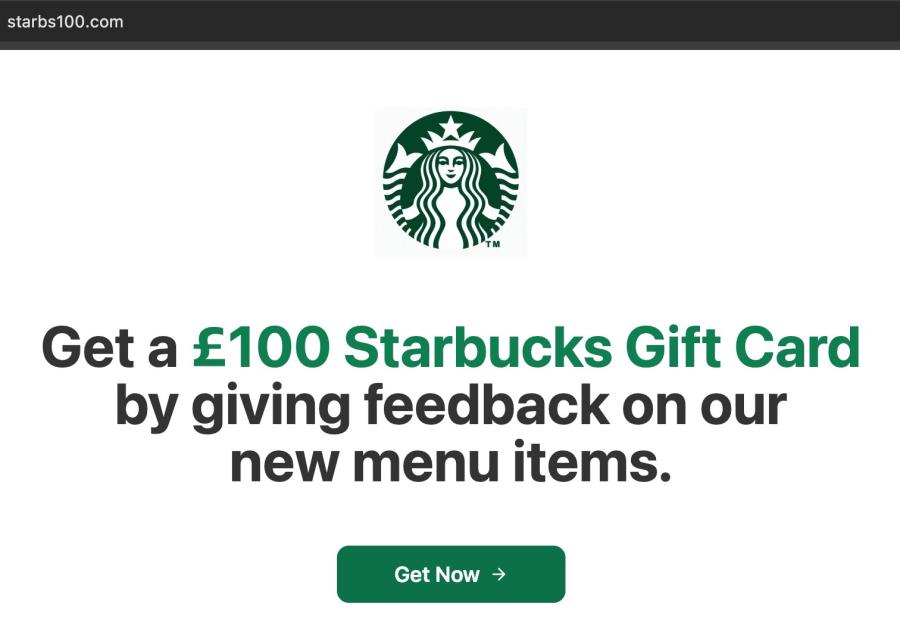
These social media posts usually promise a big reward for very little effort. They say you only need to comment on new menu items or answer a few quick questions. Once you tap the link, you’re taken to websites with names like “starbs100.com” or similar variations. Interestingly, these pages all look alike as they use the same layout, the same colors, and almost the same text.
What Actually Happens?
Instead of giving you a reward, these websites redirect you to even more pages. They might push you to complete surveys, download apps, or sign up for different offers. The real purpose of these pages is not to give you a £100 Starbucks card, it’s to earn money from the clicks, downloads, and sign ups you perform.
Why These Websites Are Dangerous?
These types of websites also have another goal: collecting your personal information. They often ask for your name, phone number, email address, and sometimes even more. Once they have this information, they can sell it to other parties for profit.
In some cases, tapping these links can even expose your phone or computer to malicious software, which can cause further problems down the line.
Will You Actually Receive the $100 USD or £100 Starbucks Card?
The answer is simple: No. Even if you complete every task they ask for, fill in every form, or finish every survey, you won’t receive anything. People who’ve tried it end up with no gift card at all, they just wasted time and possibly unwanted spam or privacy risks.
Signs That These Sites Are Untrustworthy:
Like many other scam websites, these pages also show clear warning signs:
- No real contact number or physical address.
- No official social media links.
- Poor quality website design.
- Identical website content, theme, and layout used across multiple suspicious websites.
We’ve come across many other sites using the same strategy, and plenty of users have reported negative experiences with them.
Final Verdict:
Any post or message that leads you to websites like Starbs100.com or similar pages promising a $100 USD or £100 Starbucks Gift Card is not legitimate. These offers are simply designed to benefit the scammers, not you.
It’s best to avoid clicking such links, ignore the posts, and protect your personal information. Staying alert can help you avoid unnecessary trouble and keep your data safe.
Disclaimer: This article has been written by a Scam Fighter Contributor. If you believe the article above contains inaccuracies or needs to include relevant information, please contact ScamAdviser.com using this form.
Report a Scam!

Have you fallen for a hoax, bought a fake product? Report the site and warn others!
Scam Categories
Help & Info
Top Safety Picks
Your Go-To Tools for Online SafetyDisclaimer: Some of the links here are affiliate links. If you click them and make a purchase, we may earn a commission at no extra cost to you.
- ScamAdviser App - iOS : Your personal scam detector, on the go! Check website safety, report scams, and get instant alerts. Available on iOS
- ScamAdviser App - Android : Your personal scam detector, on the go! Check website safety, report scams, and get instant alerts. Available on Android.
- NordVPN : NordVPN keeps your connection private and secure whether you are at home, traveling, or streaming from another country. It protects your data, blocks unwanted ads and trackers, and helps you access your paid subscriptions anywhere. Try it Today!
- Incogni : Incogni automatically removes your personal data from data brokers that trade in personal information online, helping reduce scam and identity theft risks without the hassle of manual opt-outs. Reclaim your privacy now!
Popular Stories
As the influence of the internet rises, so does the prevalence of online scams. There are fraudsters making all kinds of claims to trap victims online - from fake investment opportunities to online stores - and the internet allows them to operate from any part of the world with anonymity. The ability to spot online scams is an important skill to have as the virtual world is increasingly becoming a part of every facet of our lives. The below tips will help you identify the signs which can indicate that a website could be a scam. Common Sense: Too Good To Be True When looking for goods online, a great deal can be very enticing. A Gucci bag or a new iPhone for half the price? Who wouldn’t want to grab such a deal? Scammers know this too and try to take advantage of the fact. If an online deal looks too good to be true, think twice and double-check things. The easiest way to do this is to simply check out the same product at competing websites (that you trust). If the difference in prices is huge, it might be better to double-check the rest of the website. Check Out the Social Media Links Social media is a core part of ecommerce businesses these days and consumers often expect online shops to have a social media presence. Scammers know this and often insert logos of social media sites on their websites. Scratching beneath the surface often reveals this fu
How do I recover my crypto after it’s stolen? What happens if your crypto wallet is compromised? Can stolen crypto be traced, and can police actually recover crypto in 2026? These are the questions most people ask within minutes of realizing their wallet has been drained. Crypto theft is fast, quiet, and unforgiving. By the time most victims notice something is wrong, the funds are already moving across the blockchain. Once seen as a problem for exchanges and whales, crypto theft now heavily affects everyday investors. Phishing links, fake support chats, wallet approval scams, SIM swaps, and malware attacks have become common. Knowing what recovery realistically looks like—and what it doesn’t—can prevent panic, bad decisions, and costly follow-up scams. In a Nutshell Crypto recovery is possible, but only in limited situations Blockchain transactions are irreversible, but stolen crypto can still be traced Speed and documentation matter more than optimism Police and exchanges play a bigger role than private recovery services Guaranteed recovery offers are almost always scams Is it Actually Possible to Recover Stolen Crypto? Yes, crypto recovery is possible, but only under specific conditions and rarely through direct action by the victim. Blockchain transactions are final by design. Once crypto is sent and confirmed, it cannot be reversed. There is no central authority, no chargeback process, and no technical “undo” button, even if the transaction was clearly fraudulent. This is where many people ask whether stolen crypto can be traced. In most cases, it can. Every transaction