
Staplermania.com Review |Safe Store or Online Scam?
Author: Adam Collins
If you’ve been hunting for custom jerseys or stylish athletic shoes online, Staplermania.com might pop up with flashy deals and big promises. But before you hand over your card details, it’s worth taking a closer look. The site claims to “specialize in custom-designed jerseys and athletic shoes,” yet several things just don’t line up. Let’s walk through what’s going on behind the scenes.
In a Nutshell
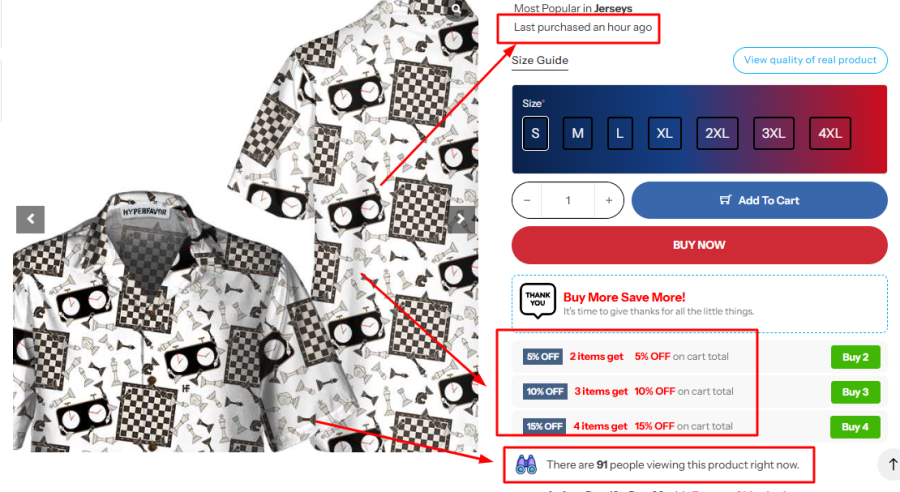
- Uses high-pressure tactics like sales countdowns and “people viewing now.”
- Displays suspicious, too-perfect reviews that don’t match actual platforms.
- Lists a Miami address that doesn’t appear connected to the business.
- Overall, Staplermania.com looks questionable and should be approached with caution.
Why Does Staplermania.com Use so Many High-Pressure Tactics?
One of the first things you’ll notice is how urgently the site pushes you to buy. Pop-ups showing “14 people viewing this item,” limited-time discounts, and even special offers for buying more items are everywhere. These tactics are designed to make you feel like you’re about to miss out or FOMO. While not illegal, they’re often used by low-quality or risky shops because rushed shoppers rarely stop to investigate whether the store is genuine.
Do the Reviews on Staplermania.com Look Real?
The reviews section is where the red flags really start stacking up. Staplermania.com shows long lists of happy customers and claims to have “Google 3000+ View Reviews: 4.9” — complete with star ratings that look exactly like Trustpilot’s design. But when you check Trustpilot itself, the page is completely empty. No reviews. No ratings. Nothing.
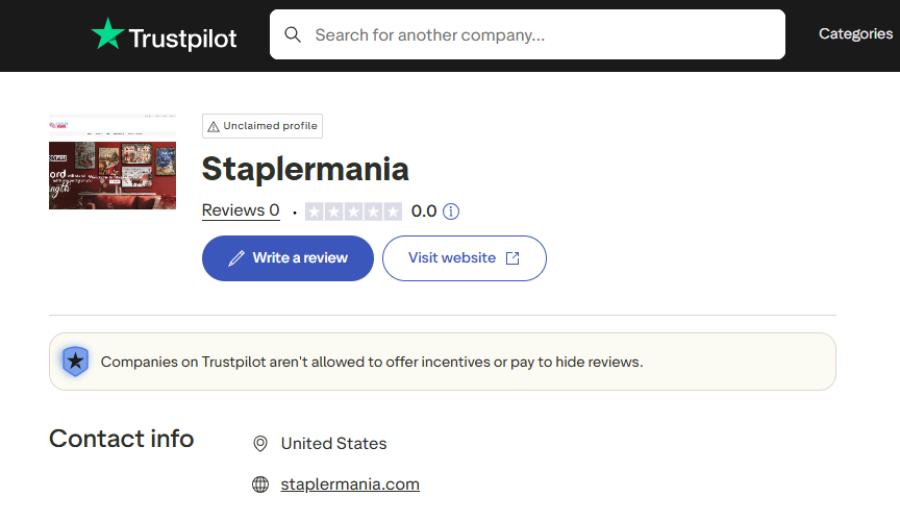
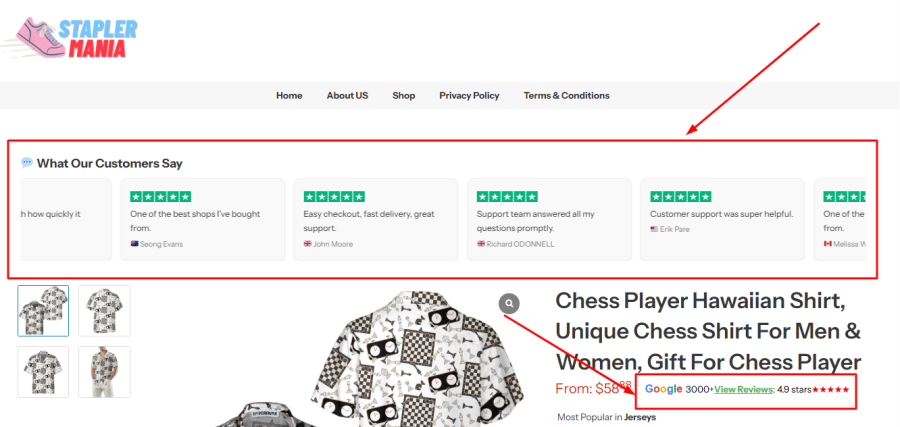
With fake review widgets becoming more common, the mismatch between what’s on their site and what’s on real review platforms is a big warning sign. Genuine businesses don’t need to invent thousands of glowing reviews.
Where is Staplermania.com Located?
Staplermania.com lists its address as 5019 NW 165th St, Miami Lakes, FL 33014. Sounds legit — until you try to verify it. Google Maps shows no business by that name, and another completely unrelated company is listed at the exact same address. In other words, there’s no clear proof that Staplermania.com actually operates from where it claims.
A lack of verified location is one of the oldest scam site red flags. Real stores want you to know where to find them. Suspicious ones prefer to stay blurry.
Bottom Line: Is Staplermania.com a Scam?
- Aggressive sales pressure
- Suspicious reviews that don’t match real platforms
- Unverifiable location
- Limited online footprint
Overall: Staplermania.com raises too many red flags to be considered safe.
FAQs
What are the signs that a website is unsafe?
Common warning signs include fake-looking reviews, extremely large discounts, pop-ups pushing you to buy quickly, missing company information, and an address that can’t be verified on Google Maps. If the site also hides its contact details or has a very new domain, that’s another strong indicator that it may not be trustworthy.
How can I check if an online store is legit?
Look up independent reviews on platforms like Trustpilot, check the site’s age using a domain checker, search the business address on Google Maps, and inspect the website’s social media presence. Legitimate stores usually have real customer history and clear company information.
What are the red flags of online shopping scams?
Scam stores often reuse the same template, show impossible discounts, steal photos, mimic review platforms, and push “limited-time offers” nonstop. They also tend to have slow or nonexistent customer service and disappear when you ask for refunds.
What are the safest ways to shop online?
Use secure payment methods like credit cards or PayPal, avoid sites with no external reviews, and confirm the retailer’s contact details before buying. If a deal feels too good to be true, slow down and research the website first. Tools like ScamAdviser make this process easier by analyzing risk signals instantly.
How can I avoid fake online stores?
Stick to reputable retailers, double-check URLs, avoid clicking random ads on social media, and never buy from a website that pressures you to act immediately. Installing safety tools or apps that flag suspicious websites can save you from losing money.
Stay Safe — Install the ScamAdviser App
Before you shop on any unfamiliar store, scan it with the ScamAdviser App. Get instant warnings, risk scores, and helpful safety tips so you can shop confidently.
This article has been written by a scam fighter volunteer. If you believe the article above contains inaccuracies or needs to include relevant information, please contact ScamAdviser.com using this form.

Report a Scam!

Have you fallen for a hoax, bought a fake product? Report the site and warn others!
Scam Categories
Help & Info
Top Safety Picks
Your Go-To Tools for Online SafetyDisclaimer: Some of the links here are affiliate links. If you click them and make a purchase, we may earn a commission at no extra cost to you.
- ScamAdviser App - iOS : Your personal scam detector, on the go! Check website safety, report scams, and get instant alerts. Available on iOS
- ScamAdviser App - Android : Your personal scam detector, on the go! Check website safety, report scams, and get instant alerts. Available on Android.
- NordVPN : NordVPN keeps your connection private and secure whether you are at home, traveling, or streaming from another country. It protects your data, blocks unwanted ads and trackers, and helps you access your paid subscriptions anywhere. Try it Today!
- Incogni : Incogni automatically removes your personal data from data brokers that trade in personal information online, helping reduce scam and identity theft risks without the hassle of manual opt-outs. Reclaim your privacy now!
Popular Stories
As the influence of the internet rises, so does the prevalence of online scams. There are fraudsters making all kinds of claims to trap victims online - from fake investment opportunities to online stores - and the internet allows them to operate from any part of the world with anonymity. The ability to spot online scams is an important skill to have as the virtual world is increasingly becoming a part of every facet of our lives. The below tips will help you identify the signs which can indicate that a website could be a scam. Common Sense: Too Good To Be True When looking for goods online, a great deal can be very enticing. A Gucci bag or a new iPhone for half the price? Who wouldn’t want to grab such a deal? Scammers know this too and try to take advantage of the fact. If an online deal looks too good to be true, think twice and double-check things. The easiest way to do this is to simply check out the same product at competing websites (that you trust). If the difference in prices is huge, it might be better to double-check the rest of the website. Check Out the Social Media Links Social media is a core part of ecommerce businesses these days and consumers often expect online shops to have a social media presence. Scammers know this and often insert logos of social media sites on their websites. Scratching beneath the surface often reveals this fu
How do I recover my crypto after it’s stolen? What happens if your crypto wallet is compromised? Can stolen crypto be traced, and can police actually recover crypto in 2026? These are the questions most people ask within minutes of realizing their wallet has been drained. Crypto theft is fast, quiet, and unforgiving. By the time most victims notice something is wrong, the funds are already moving across the blockchain. Once seen as a problem for exchanges and whales, crypto theft now heavily affects everyday investors. Phishing links, fake support chats, wallet approval scams, SIM swaps, and malware attacks have become common. Knowing what recovery realistically looks like—and what it doesn’t—can prevent panic, bad decisions, and costly follow-up scams. In a Nutshell Crypto recovery is possible, but only in limited situations Blockchain transactions are irreversible, but stolen crypto can still be traced Speed and documentation matter more than optimism Police and exchanges play a bigger role than private recovery services Guaranteed recovery offers are almost always scams Is it Actually Possible to Recover Stolen Crypto? Yes, crypto recovery is possible, but only under specific conditions and rarely through direct action by the victim. Blockchain transactions are final by design. Once crypto is sent and confirmed, it cannot be reversed. There is no central authority, no chargeback process, and no technical “undo” button, even if the transaction was clearly fraudulent. This is where many people ask whether stolen crypto can be traced. In most cases, it can. Every transaction