
[Scam Alert] Tedinad.com and Helenabl.com
Author: Trend Micro
Recently, many consumers have been searching for reviews on the online shops, Tedinad and Helenabl. Consumers are rightly wondering if they’re a scam. Here’s the answer: they are! Don’t shop on these websites!
Tedinad.com
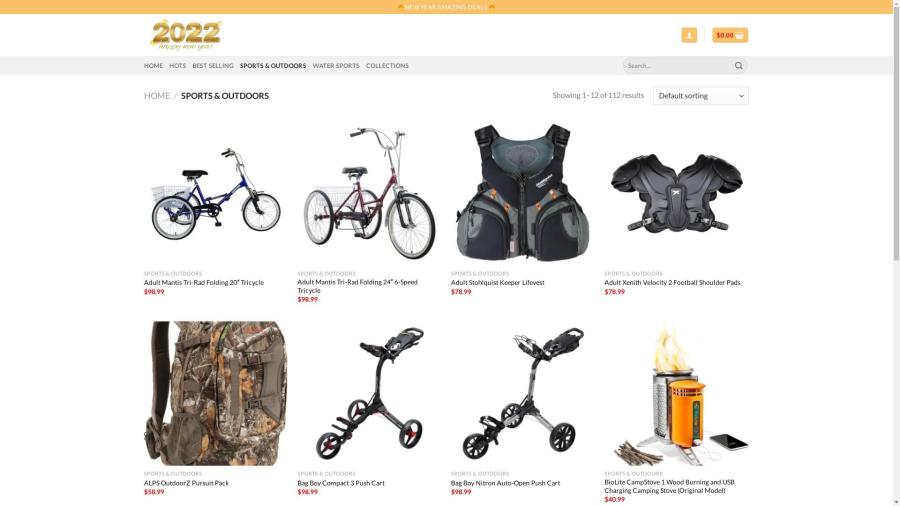
Tedinad claims to be a shop selling outdoor equipment and garden appliances, from mountain bikes to pizza ovens and bird feeders. However, there are several red flags that should concern consumers:
The website is very new. There are no product reviews.
There is no contact phone number, and the listed address seems to correspond to a random residential address.
The privacy policy appears to be copied and pasted from elsewhere. There is no mention of a returns policy.
They score very low on all listed consumer trust scores. ScamAdviser awards them 40/100.
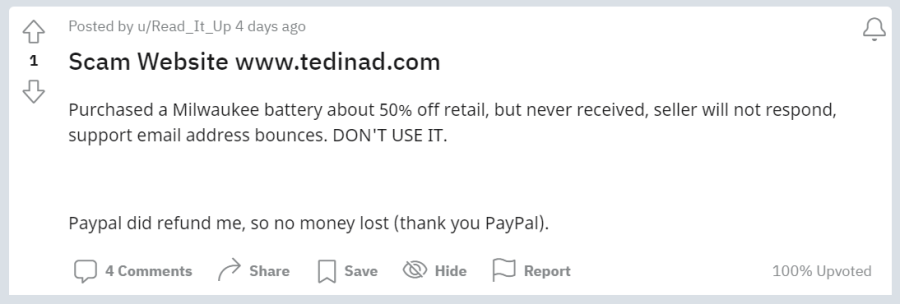
Source: Reddit
These users on Reddit appear to have learnt their lesson the hard way. Don’t let that be you!
Helenabl.com
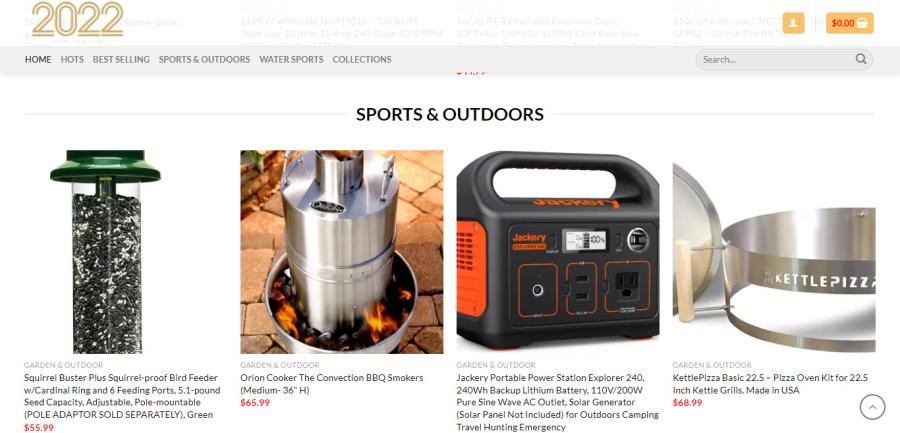
Helenabl appears to be remarkably similar to Tedinad. They also claim to be in the business of selling outdoor equipment and garden appliances. Their consumer trust score is even lower though! On ScamAdviser, it’s a laughable 1/100.
Likewise, there are red flags which should make us close that tab ASAP:
- The website is very new. There are no product reviews.
- The website advertises some outrageously low discount offers.
- The listed address (no phone number) appears to be fake — and is actually associated with other scam online stores.
- There are fake “trusted” seals on the webpage.
- The website’s dashboard is lifted from other websites — as are product pictures.
To summarize folks, stay away from websites like these — and always do your research. For more tips on spotting fake online shops, please visit this article. Further red flags not mentioned above include:
- Unusual payment methods (wire transfer/cash apps etc.).
- Unreasonable requests for detailed personal information.
- Typos and questionable wording.
How to Protect Yourself
- NEVER click links or attachments from unknown sources. Use Trend Micro Check to combat scams with ease! (It’s 100% FREE.)
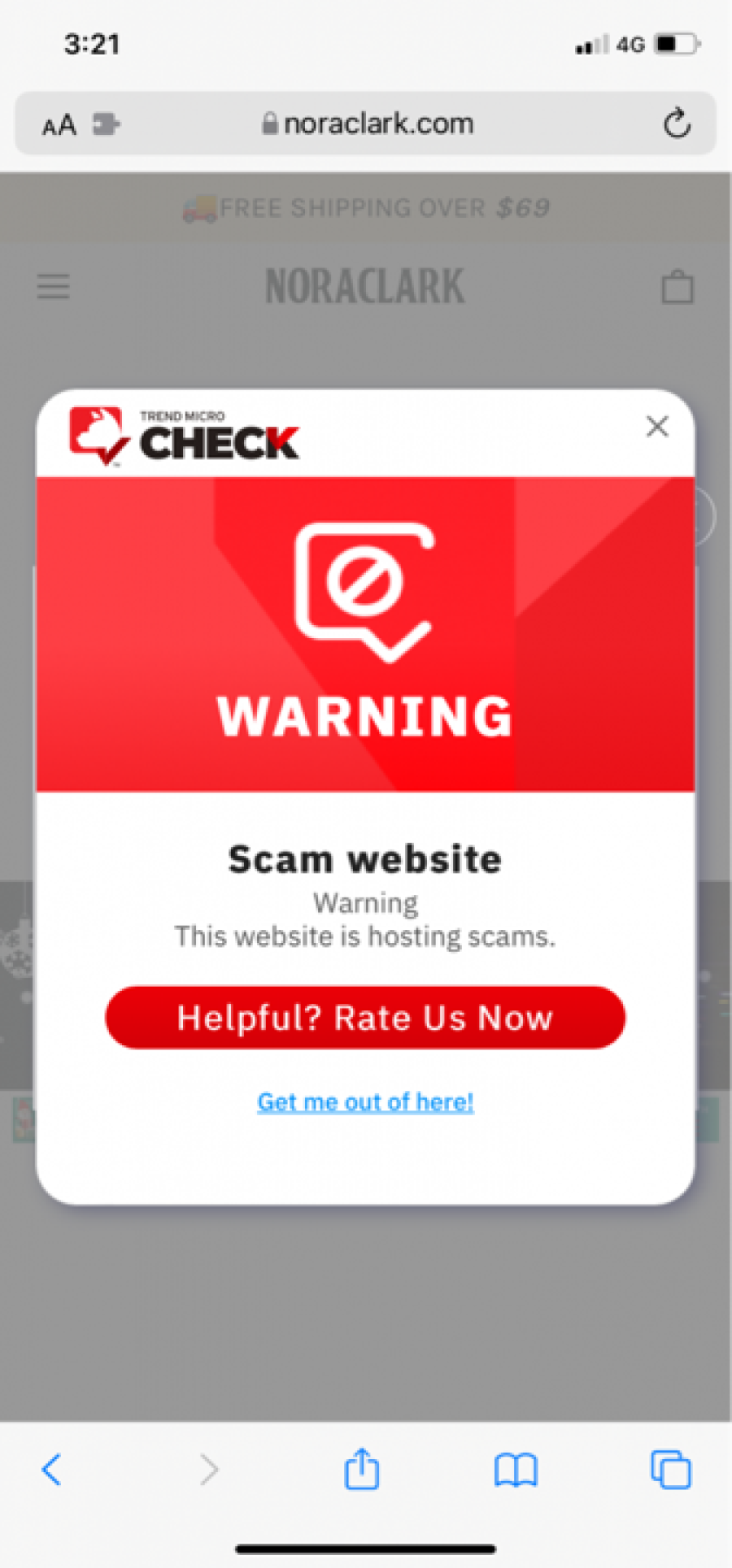
Trend Micro Check is an all-in-one browser extension for detecting scams, phishing attacks, malware, and dangerous links — and it’s FREE!
After you’ve pinned Trend Micro Check, it will block dangerous sites automatically! It is now available on Safari, Google Chrome, and Microsoft Edge.
Check out this page for more information on Trend Micro Check.
-
Shop only on legitimate online stores. Do your homework and read reviews about the online store you plan to shop at.
-
Don’t forget to add an extra layer of protection to your device with Trend Micro Maximum Security! It includes Web Threat Protection, Ransomware Protection, Anti-phishing, and Anti-spam Protection to help you combat scams and cyberattacks. Click the button below to give it a try:
As ever, if you’ve found this article an interesting and/or helpful read, please do SHARE with friends and family to help keep the online community secure and protected.
Report a Scam!

Have you fallen for a hoax, bought a fake product? Report the site and warn others!
Scam Categories
Help & Info
Top Safety Picks
Your Go-To Tools for Online SafetyDisclaimer: Some of the links here are affiliate links. If you click them and make a purchase, we may earn a commission at no extra cost to you.
- ScamAdviser App : That site looks legit. That's exactly how they get you. Modern scams are frighteningly convincing. ScamAdviser scans sites and blocks fraud calls automatically. Free on iOS & Android.
- NordVPN : NordVPN delivers powerful, seamless protection for your online life - whether you're at home, on public Wi-Fi, or traveling abroad. Recognized as one of the fastest VPN services available, it combines lightning-fast speeds with advanced encryption to keep
- Incogni : Incogni automatically removes your personal data from data brokers that trade in personal information online, helping reduce scam and identity theft risks without the hassle of manual opt-outs. Reclaim your privacy now!
- Private Internet Access (PIA) : PIA gives you a no-logs VPN built on the latest encryption standards and WireGuard protocol — meaning your browsing activity stays yours alone. Fast, private, and transparent. Take back your privacy today!
- Surfshark VPN : One subscription, unlimited devices. Surfshark is the fastest VPN out there — covering your phone, laptop, tablet and more with a stable, secure connection for browsing, streaming and working. Get Surfshark now!
- Proton VPN : Independently audited and built with a strict no-logs policy, Proton VPN is trusted by over 3 million users worldwide. It’s been named Best VPN by Wired, PCMag, and Vice—offering strong encryption for anyone who takes their privacy seriously. Give Proton
- Mysterium VPN : MysteriumVPN gives you real privacy without relying on a single company to protect it. Built on a decentralized network of independent nodes across the globe, it hides your traffic from ISPs, trackers, and the VPN provider itself. Choose data center IPs f
Popular Stories
In a nutshell: A good VPN protects your privacy with strong encryption, a strict no-logs policy, and fast protocols like WireGuard. The best VPNs also offer wide server coverage, leak protection, and easy-to-use apps for all devices. For 2025, the top providers are NordVPN, ExpressVPN, Surfshark, Proton VPN, Private Internet Access, CyberGhost, and Mullvad—each excelling in speed, security, or value. In an age where every click is tracked, a Virtual Private Network (VPN) is no longer just a luxury—it's an essential tool for digital privacy and security. A VPN works by creating a secure, encrypted tunnel between your device and the internet, masking your real IP address and protecting your sensitive data from prying eyes. But with hundreds of providers out there, how do you sort the secure from the suspect? This guide breaks down the non-negotiable features of a quality VPN and highlights the 7 top-rated services for 2025. What to Look for in a Good VPN: The 4 Non-Negotiable Pillars 1. Ironclad Security Features Strong Encryption: AES-256, the gold standard. Secure Protocols: OpenVPN, WireGuard, NordLynx, Lightway. Avoid PPTP. Kill Switch: Ensures no accidental IP leaks. Leak Protection: Covers DNS, IPv6, and WebRTC. 2. Verified Privacy Practices No-Logs Policy: No activity or metadata tracking. Independent Audits: Verification by third parties. Safe Jurisdiction: Prefer countries outside the 5/9/14 Eyes alliances. 3. High-Speed Performance Fast Protocols: WireGuard and equivalents. Large Server Network: Less crowding, more reliable speeds. 4. Essential Usability Features Multi-Device Apps: Windows, Mac, iOS, Android, routers. Simultaneous Connections: One account, many devices. Unblocking Power: Netflix, Hulu, BBC
This article has been updated by Jamie James on June 9 with the latest data and analysis we have found using real user reports and experiences submitted to ScamAdviser. Just received that terrifying notification? Or perhaps you've noticed suspicious activity in your accounts? Take a deep breath. Your email, password, phone number, home address, payment details, or identity documents may now be in places you cannot control. But the next steps do not have to be confusing. What matters most is how quickly you act, order, and know which exposed data creates the biggest risk. This guide explains what to do after a data breach, how to check the damage, and how to protect yourself from identity theft, account takeover, and follow-up scams. Quick Summary Verify the data breach notice through the company’s official website before clicking any links. Secure your primary email account first because it controls many password resets. Change the exposed password and every reused or similar password. Enable multi-factor authentication on email, banking, payment, cloud, and social accounts. Contact your bank or card issuer if payment or bank account details were exposed. Freeze or protect your credit if sensitive identity information was compromised. Watch for phishing messages, fake refund offers, and scam websites that use your leaked details. Starting with Data Breach Numbers The numbers don't lie: according to a 2024 report, the number of data breach victim notices has grown by a staggering 211% year-over-year. This isn't just a distant threat; it's a stark reality many individuals fa