
QuikHeat Pro Heater Review: Scam or Legit? | Does Quik Heat Pro Heater Work As Per It Claims?
Author: De-Reviews.com Team
The QuikHeat Pro Heater is widely promoted across online marketplaces as a smart, energy efficient heating solution. Its advertising highlights quick warmth, reduced electricity costs, and a sleek, space saving design. These claims have drawn attention from shoppers looking for a simple heating option.
However, when examined more closely, the heater’s real world performance does not fully match how it is marketed. So, here we down what the Quik Heat Pro Heater realistically offers and where expectations varied from the reality.
Build and Ease of Use:
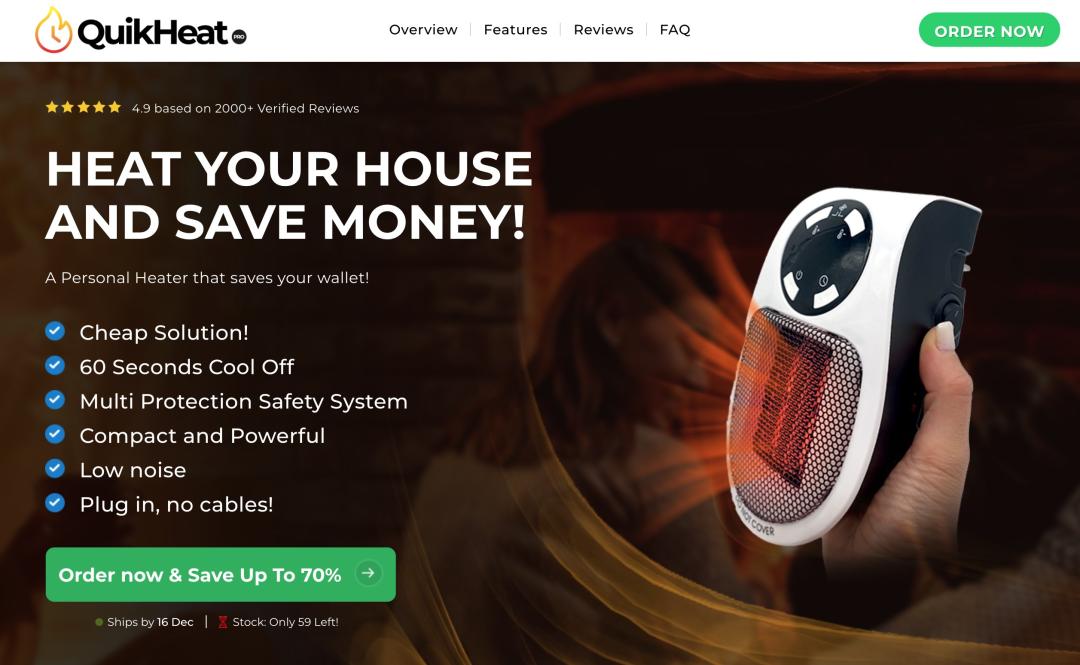
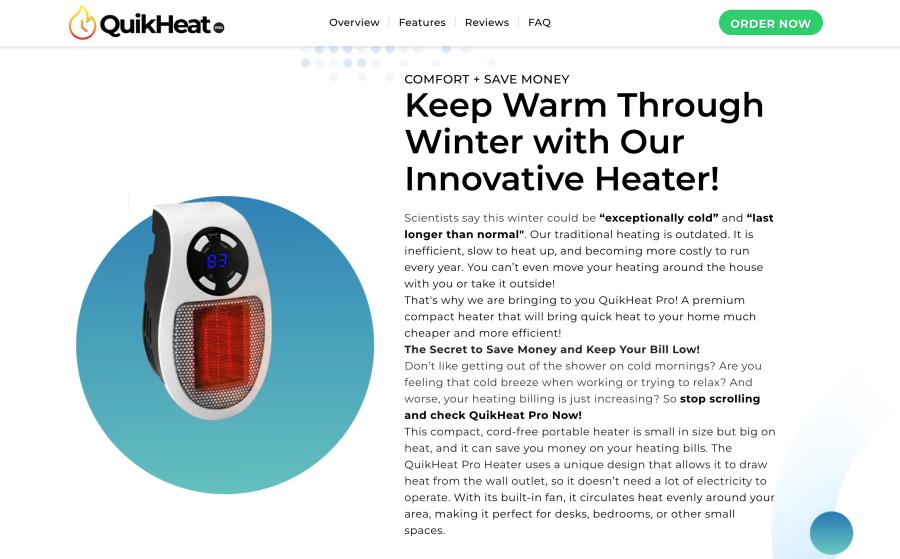
The QuikHeat Pro Heater is a small, plug-in ceramic heater designed for close or small range use. Its compact size makes it easy to place on desks, bedside tables, or in tight corners where extra warmth is needed.
One of its main advantages is convenience. The heater is lightweight, requires no installation, and works immediately once plugged in. This makes it suitable for users who want quick, personal warmth without complicated setup.
However, its small size also limits its heating capability. Controls are usually basic, offering only simple temperature adjustments and an on/off function. More importantly, it is not built to warm larger spaces effectively.
Actual Performance Compared to Claims:
Marketing materials often describe the QuikHeat Pro Heater as a powerful solution that heats rooms rapidly while significantly lowering energy bills. But according to user experiences, these promises tend to be more marketing driven than realistic.
The heater functions like many basic ceramic heaters already available at lower prices. It produces warmth within a short distance, but its effect fades quickly beyond that range. While it can provide comfort when used nearby, it does not noticeably reduce overall heating costs or outperform conventional space heaters.
Sales and Promotional Practices:
Many websites selling this heater rely on strong persuasion techniques. These often include countdown timers, limited stock warnings, and customer reviews that cannot be independently verified. Some product descriptions also suggest that the heater can replace full size heating systems, which doesn’t seem to be realistic.
Such marketing approaches are designed to prompt fast purchasing decisions rather than provide clear, balanced information about the product’s limitations.
Website Patterns Worth Noting:
A closer look at the websites promoting the QuikHeat Pro Heater reveals repeated patterns such as:
- Return and refund policies may be listed but are usually written in vague terms.
- In addition, many sites use similar layouts, repeated images, and duplicated content.
- No social media presence or links to active social media profiles, which legitimate websites typically maintain.
The trusted website review platform like De-Reviews.com has provided a 43% out of 100% TrustScore for Get-QuikHeatPro.com (the website that is selling this product).
While these factors do not automatically mean the product is defective, these are the patterns mostly seen on problematic sites.
What Buyers Should Expect:
The QuikHeat Pro Heater can be useful in certain situations. It may work as a personal heating device for small spaces, offering a simple and portable way to stay warm at a desk or bedside.
However, it may not be suitable for heating entire rooms, replacing larger heaters, or delivering the dramatic energy savings often promised in advertisements.
Final Thoughts:
The QuikHeat Pro Heater may work as a small ceramic heater for personal use, such as warming the area near your desk or bed. While it may provide heat at close range, the way it is advertised often makes it seem more powerful than it actually is. This can lead some buyers to expect more than the heater can deliver.
In everyday use, it may work for small spaces. It is not designed to heat an entire room or replace a larger heater. Also, the energy saving claims promoted in ads are often unrealistic, as the heater’s impact on overall electricity costs is minimal.
If you understand these limits and only need a small source of nearby warmth, the heater may be useful. However, people looking for strong heating performance or noticeable savings on energy bills may find that it does not meet their expectations.
Disclaimer: This article has been written by a Scam Fighter Contributor. If you believe the article above contains inaccuracies or needs to include relevant information, please contact ScamAdviser.com using this form.
Report a Scam!

Have you fallen for a hoax, bought a fake product? Report the site and warn others!
Scam Categories
Help & Info
Top Safety Picks
Your Go-To Tools for Online Safety
- ScamAdviser App - iOS : Your personal scam detector, on the go! Check website safety, report scams, and get instant alerts. Available on iOS
- ScamAdviser App - Android : Your personal scam detector, on the go! Check website safety, report scams, and get instant alerts. Available on Android.
- NordVPN : NordVPN keeps your connection private and secure whether you are at home, traveling, or streaming from another country. It protects your data, blocks unwanted ads and trackers, and helps you access your paid subscriptions anywhere. Try it Today!
Popular Stories
As the influence of the internet rises, so does the prevalence of online scams. There are fraudsters making all kinds of claims to trap victims online - from fake investment opportunities to online stores - and the internet allows them to operate from any part of the world with anonymity. The ability to spot online scams is an important skill to have as the virtual world is increasingly becoming a part of every facet of our lives. The below tips will help you identify the signs which can indicate that a website could be a scam. Common Sense: Too Good To Be True When looking for goods online, a great deal can be very enticing. A Gucci bag or a new iPhone for half the price? Who wouldn’t want to grab such a deal? Scammers know this too and try to take advantage of the fact. If an online deal looks too good to be true, think twice and double-check things. The easiest way to do this is to simply check out the same product at competing websites (that you trust). If the difference in prices is huge, it might be better to double-check the rest of the website. Check Out the Social Media Links Social media is a core part of ecommerce businesses these days and consumers often expect online shops to have a social media presence. Scammers know this and often insert logos of social media sites on their websites. Scratching beneath the surface often reveals this fu
Disclaimer: This article was originally published in 2018 and has been updated in October 2025 to reflect more current information, resources, and advice. Scams and recovery options continue to evolve, so always double-check with your bank, payment provider, or local consumer protection authority for the latest guidance. So the worst has come to pass - you realise you parted with your money too fast, and the site you used was a scam - what now? Well first of all, don’t despair!! If you think you have been scammed, the first port of call when having an issue is to simply ask for a refund. This is the first and easiest step to determine whether you are dealing with a genuine company or scammers. Sadly, getting your money back from a scammer is not as simple as just asking. If you are indeed dealing with scammers, the procedure (and chance) of getting your money back varies depending on the payment method you used. PayPal Debit card/Credit card Bank transfer Wire transfer Google Pay Bitcoin PayPal Good news: PayPal gives you strong protection. You can file a dispute within 180 days of your purchase. You can get a refund if: Your order never arrives, and the seller cannot provide proof of delivery. The scammer sends you something completely different (e.g., a controller instead of a PlayStation). The product condition was misrepresented (sold as new but arrives used). The item is missing undisclosed parts. The item is counterfeit. Start your claim directly through Pay