
Mermaid Caught on Camera: Real or Fake Viral Clips? | Did They Really Caught Mermaid In Fishing Net?
Author: De-Reviews.com Team
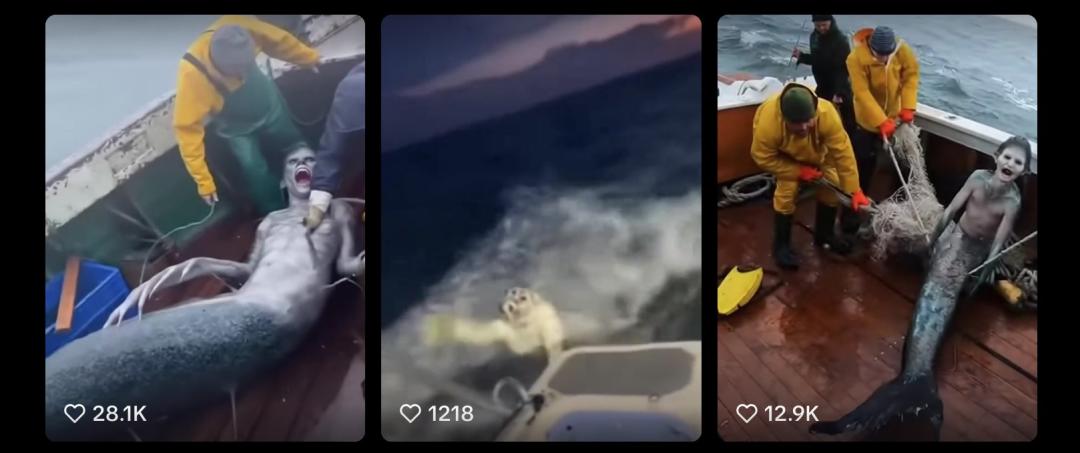
Viral videos claiming to show a mermaid caught in a fishing net or mermaid found on camera have taken over TikTok, YouTube, Instagram Reels, and Facebook. These clips generate millions of views, often showing a human like creature trapped in a net, washed up on a beach, or moving underwater with a fish like tail.
But are any of these videos real? This article breaks down everything circulating online, analyzes the visuals, checks available evidence, and confirms whether a real mermaid has ever been caught on camera.
Where These Mermaid Videos Are Said To Come From?
Online users have shared multiple versions of so-called mermaid footage, often labelled as:
Mermaid caught in a fishing net.
Mermaid caught on camera in Ireland.
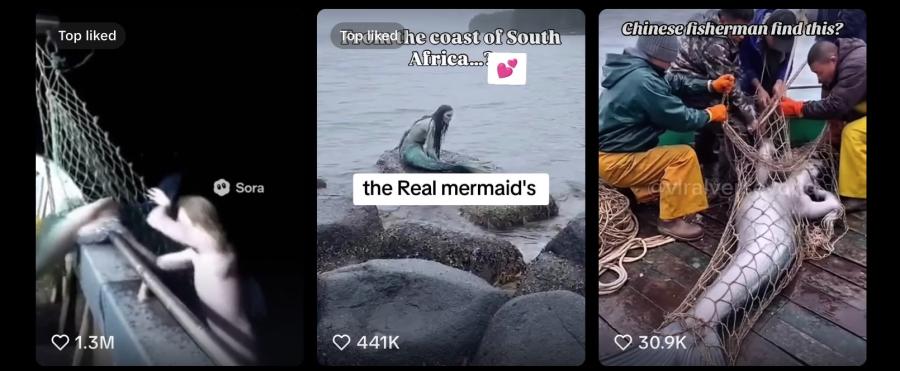
Mermaid found in South Africa.
Fishermen find real mermaid in China.
Mermaid caught in Vietnam.
Mermaid found in Japan.
Although the locations differ, the format is similar, a dramatic scene involving a half human creature filmed near the ocean.
What These Mermaid Videos Actually Show?
When the videos are examined closely, they display several visual and technical flaws. The key indicators include the following:
Unnatural Body Movement:
Many clips display:
- Robotic or jerky motions.
- Perfectly looped tail flicks.
- Body freezes where the creature does not react to touch or pressure.
- Inconsistent muscle movement during supposed “struggling”.
Marine animals caught in nets show real flinching, reflexes, and irregular movements. The inconsistencies strongly suggest digital generation.
Lighting and Shadow Mismatches:
Across viral mermaid clips, lighting issues appear frequently:
- Sunlight coming from one angle while the mermaid is lit from another.
- Shadows that don’t match the environment.
- Glowing skin inconsistent with natural surroundings.
These mismatches are common in AI-generated video models.
AI Watermarks and Tool Signatures:
Some videos circulating online visibly include:
- Sora AI watermark.
- Visual patterns typical of Runway, Pika Labs, and Midjourney.
- Descriptions mentioning “created with AI tools”.
This indicates that several clips are intentionally produced using text-to-video generators.
Incorrect Interaction With Objects:
The fishing net seen in many videos is a major giveaway. In multiple examples:
- The net hovers above the skin.
- Some strands pass through the body.
- Edges move as if floating on a separate layer.
This happens when AI fails to calculate correct physical interaction in generated footage.
Background Glitches and Environmental Errors:
Multiple videos show:
- Looping waves.
- Distorted water surfaces.
- Melting sea textures when the camera moves.
- Sudden background shifts.
These background errors align with common AI-rendering limitations.
Fact Checking:
Through detailed fact checking, we have found the following information:
Verified AI or CGI Creations:
Fact-checkers and experts have confirmed that many trending mermaid videos originate from CGI creators, AI artists, VFX hobbyists, Experimental content producers. Some creators even state in the captions that the videos are made using tools like Sora, Runway, or Pika Labs.
No News Coverage or Official Reports Anywhere:
If a real mermaid were discovered, it would instantly become global news. Yet, any major news platforms or major marine research institutions have not reported a single verified mermaid discovery. This absence is significant and confirms the lack of authenticity.
Scientific Consensus:
Marine biologists and scientific organizations state:
- No biological evidence exists for mermaid like species.
- Human-fish hybrid anatomy is impossible.
- No preserved specimen or fossil has ever been found.
- No underwater expedition has discovered anything similar.
- The scientific community is unanimous, mermaids do not exist in known marine biology.
Historical Hoaxes:
Past hoaxes add context to modern false claims:
- The Fiji Mermaid, proven to be a staged creation.
- Coastal sculptures and props used in awareness films.
- Manatee and seal misidentifications recorded historically.
These incidents contributed to mermaid myths long before AI technology existed.
The Truth:
After examining all the viral mermaid clips and available verified information, there is no confirmed evidence that a real mermaid has ever been captured on camera to date. Despite the widespread claims, none of these incidents have been confirmed by any official authority or reputable news outlet.
Most viral clips are AI-generated, CGI-edited, or digitally manipulated. Even some creators have admitted using Sora AI and other video tools to produce the scenes. Until today, no genuine mermaid discovery has been reported by any legitimate authority or media organization.
Report a Scam!

Have you fallen for a hoax, bought a fake product? Report the site and warn others!
Scam Categories
Help & Info
Top Safety Picks
Your Go-To Tools for Online SafetyDisclaimer: Some of the links here are affiliate links. If you click them and make a purchase, we may earn a commission at no extra cost to you.
- ScamAdviser App - iOS : Your personal scam detector, on the go! Check website safety, report scams, and get instant alerts. Available on iOS
- ScamAdviser App - Android : Your personal scam detector, on the go! Check website safety, report scams, and get instant alerts. Available on Android.
- NordVPN : NordVPN keeps your connection private and secure whether you are at home, traveling, or streaming from another country. It protects your data, blocks unwanted ads and trackers, and helps you access your paid subscriptions anywhere. Try it Today!
- Incogni : Incogni automatically removes your personal data from data brokers that trade in personal information online, helping reduce scam and identity theft risks without the hassle of manual opt-outs. Reclaim your privacy now!
Popular Stories
As the influence of the internet rises, so does the prevalence of online scams. There are fraudsters making all kinds of claims to trap victims online - from fake investment opportunities to online stores - and the internet allows them to operate from any part of the world with anonymity. The ability to spot online scams is an important skill to have as the virtual world is increasingly becoming a part of every facet of our lives. The below tips will help you identify the signs which can indicate that a website could be a scam. Common Sense: Too Good To Be True When looking for goods online, a great deal can be very enticing. A Gucci bag or a new iPhone for half the price? Who wouldn’t want to grab such a deal? Scammers know this too and try to take advantage of the fact. If an online deal looks too good to be true, think twice and double-check things. The easiest way to do this is to simply check out the same product at competing websites (that you trust). If the difference in prices is huge, it might be better to double-check the rest of the website. Check Out the Social Media Links Social media is a core part of ecommerce businesses these days and consumers often expect online shops to have a social media presence. Scammers know this and often insert logos of social media sites on their websites. Scratching beneath the surface often reveals this fu
How do I recover my crypto after it’s stolen? What happens if your crypto wallet is compromised? Can stolen crypto be traced, and can police actually recover crypto in 2026? These are the questions most people ask within minutes of realizing their wallet has been drained. Crypto theft is fast, quiet, and unforgiving. By the time most victims notice something is wrong, the funds are already moving across the blockchain. Once seen as a problem for exchanges and whales, crypto theft now heavily affects everyday investors. Phishing links, fake support chats, wallet approval scams, SIM swaps, and malware attacks have become common. Knowing what recovery realistically looks like—and what it doesn’t—can prevent panic, bad decisions, and costly follow-up scams. In a Nutshell Crypto recovery is possible, but only in limited situations Blockchain transactions are irreversible, but stolen crypto can still be traced Speed and documentation matter more than optimism Police and exchanges play a bigger role than private recovery services Guaranteed recovery offers are almost always scams Is it Actually Possible to Recover Stolen Crypto? Yes, crypto recovery is possible, but only under specific conditions and rarely through direct action by the victim. Blockchain transactions are final by design. Once crypto is sent and confirmed, it cannot be reversed. There is no central authority, no chargeback process, and no technical “undo” button, even if the transaction was clearly fraudulent. This is where many people ask whether stolen crypto can be traced. In most cases, it can. Every transaction