
Beware of Lottery Winner Giveaway Messages!
Author: De-Reviews.com Team
In today’s digital world, scams have become more creative and convincing than ever. One of the most common tactics used by online scammers is the “lottery winner giveaway” message and people are increasingly reporting about being scammed by such scams.
These messages often appear on platforms like Facebook, WhatsApp, Instagram, SMS, and even on email. They typically claim that the sender has won a huge amount of money in a lottery and is now looking to share it with “needy people” or strangers online.
What people should understand is that although these messages looks kind and generous, they are designed to trick people into losing money. Understanding how these scams work is the first step toward protecting yourself and others.
How These Messages Usually Look?
Scammers have become expert in writing their messages in such a way that they always look emotional and trustworthy. Here is one of such recently trending messages that looks very real:
"Hello how are you doing, I’m Julie leach from USA and I’m 54 years old , I’m a Business woman but my pastor preached to us on this week Sunday about helping the needy, and it really touched, so that’s why I’m here to help other for a little out of what I have, I’m texting you to see if you need some money to payoff bills or do some other things. I will be glad to help you out ??
I'm a lottery winner that win 310.5 million dollars so I think I can help people that need money for bill that is why am here"
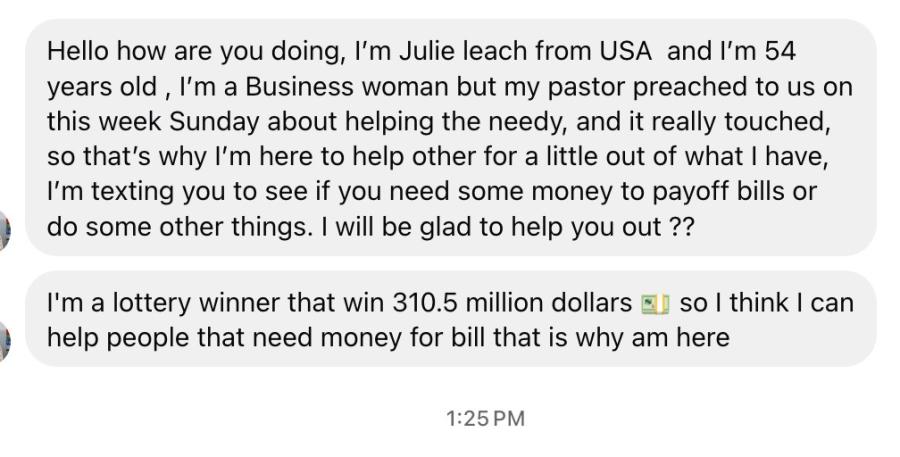
The goal of such messages is to make recipients feel special and chosen. By mixing religious reasoning, financial hardship, sentiments and emotions, scammers try to convince people that their offer is genuine.
What Happens If You Respond To These Messages?
As per many victims who replied to these messages, have reported a similar pattern such as:
- The scammer pretends to be friendly and patient.
- Once trust is built, they claim there is a “small fee” required before receiving the money, this could be labeled as a processing charge, verification fee, transfer cost, tax payment, or document clearance fee or something like that.
- People who believe the story send the requested fee.
- After receiving the money, the scammer either asks for more fees or disappears entirely.
- In reality, you will never receive the promised money, no matter how many fees you pay. These scammers operate only to steal your hard earned money.
Why Lottery Winner Giveaway Messages Are Fake?
- Legitimate lottery winners do not contact strangers online.
- No official organization asks you to pay money to receive a prize.
- Scammers use fake names, stolen photos, and fake stories.
- Many profiles used in these scams are newly created or lack real activity.
- The language used in these messages is often broken or unusual.
- These messages exploit people’s kindness, financial stress, sentiments and hope.
How to Protect Yourself from Lottery Winner Giveaway Scams?
Staying safe online does not need any magical skills or advanced technical knowledge. Here are simple steps everyone can follow:
Do Not Respond to Suspicious Messages:
If someone you don’t know suddenly messages you saying they want to give you money, you should treat it as a scam. Legitimate people or organizations will never approach strangers out of nowhere with big offers. The safest thing to do is ignore the message, delete it, and avoid replying because even a single response may encourage scammers to target you further.
Never Pay Any Fee to Get a Prize:
This is one of the biggest warning signs. Scammers usually ask you to pay a small amount first, saying it’s for processing, verification, tax, transfer charges or something like that. In reality, genuine giveaways, charities, or companies mostly don’t ask you to pay anything before receiving a prize. If someone asks you to send money in order to get money, it is most likely a scam.
Avoid Sharing Personal Information:
Never share sensitive information such as your full name, address, bank details, OTPs, passport or ID numbers, or any private documents. Scammers can use these details to steal your identity, access your accounts, or cause financial harm. Even information that seems harmless can be dangerous in the wrong hands.
Verify the Source:
If you are unsure whether a message is real, search the sender’s name or the exact message online. Many scam messages are copied and used repeatedly, so chances are high that someone has already reported it. A quick search can help you confirm whether it’s fake.
Report the Scammer:
Social media platforms, messaging apps, and email services all have a “Report” option. Use it whenever you receive suspicious messages. Reporting helps the platform remove fraudulent accounts, preventing others from being tricked by the same scammer time and again.
Educate Friends and Family:
Scammers often target elderly people, students, or anyone who may not be familiar with online fraud. Talk to your family and friends about these types of scams so they can know and stay alert. A simple conversation or reminder can save someone from losing their money or personal information.
Why People Still Fall for These Scams?
Scammers are skilled at tapping victims into emotions. People experiencing financial stress may find hope in these messages. Some feel flattered that someone wants to help them. Others simply trust too easily. Understanding that scammers are trained manipulators helps you stay aware and realistic.
Final Thoughts:
Lottery giveaway messages may seem harmless at first glance, but they are carefully well designed traps. These scams have caused many individuals to lose their savings, personal data, and peace of mind. The safest approach is simple, never trust unexpected offers of money, especially from strangers online.
By staying informed, verifying suspicious messages, and refusing to pay any upfront fee, you can protect yourself and help build a safer online community. Always remember: Real lottery winners don’t look for strangers to give away their money.
Image Source:
Disclaimer: This article has been written by a Scam Fighter Contributor. If you believe the article above contains inaccuracies or needs to include relevant information, please contact ScamAdviser.com using this form.
Report a Scam!

Have you fallen for a hoax, bought a fake product? Report the site and warn others!
Scam Categories
Help & Info
Top Safety Picks
Your Go-To Tools for Online SafetyDisclaimer: Some of the links here are affiliate links. If you click them and make a purchase, we may earn a commission at no extra cost to you.
- ScamAdviser App - iOS : Your personal scam detector, on the go! Check website safety, report scams, and get instant alerts. Available on iOS
- ScamAdviser App - Android : Your personal scam detector, on the go! Check website safety, report scams, and get instant alerts. Available on Android.
- NordVPN : NordVPN keeps your connection private and secure whether you are at home, traveling, or streaming from another country. It protects your data, blocks unwanted ads and trackers, and helps you access your paid subscriptions anywhere. Try it Today!
- Incogni : Incogni automatically removes your personal data from data brokers that trade in personal information online, helping reduce scam and identity theft risks without the hassle of manual opt-outs. Reclaim your privacy now!
Popular Stories
As the influence of the internet rises, so does the prevalence of online scams. There are fraudsters making all kinds of claims to trap victims online - from fake investment opportunities to online stores - and the internet allows them to operate from any part of the world with anonymity. The ability to spot online scams is an important skill to have as the virtual world is increasingly becoming a part of every facet of our lives. The below tips will help you identify the signs which can indicate that a website could be a scam. Common Sense: Too Good To Be True When looking for goods online, a great deal can be very enticing. A Gucci bag or a new iPhone for half the price? Who wouldn’t want to grab such a deal? Scammers know this too and try to take advantage of the fact. If an online deal looks too good to be true, think twice and double-check things. The easiest way to do this is to simply check out the same product at competing websites (that you trust). If the difference in prices is huge, it might be better to double-check the rest of the website. Check Out the Social Media Links Social media is a core part of ecommerce businesses these days and consumers often expect online shops to have a social media presence. Scammers know this and often insert logos of social media sites on their websites. Scratching beneath the surface often reveals this fu
How do I recover my crypto after it’s stolen? What happens if your crypto wallet is compromised? Can stolen crypto be traced, and can police actually recover crypto in 2026? These are the questions most people ask within minutes of realizing their wallet has been drained. Crypto theft is fast, quiet, and unforgiving. By the time most victims notice something is wrong, the funds are already moving across the blockchain. Once seen as a problem for exchanges and whales, crypto theft now heavily affects everyday investors. Phishing links, fake support chats, wallet approval scams, SIM swaps, and malware attacks have become common. Knowing what recovery realistically looks like—and what it doesn’t—can prevent panic, bad decisions, and costly follow-up scams. In a Nutshell Crypto recovery is possible, but only in limited situations Blockchain transactions are irreversible, but stolen crypto can still be traced Speed and documentation matter more than optimism Police and exchanges play a bigger role than private recovery services Guaranteed recovery offers are almost always scams Is it Actually Possible to Recover Stolen Crypto? Yes, crypto recovery is possible, but only under specific conditions and rarely through direct action by the victim. Blockchain transactions are final by design. Once crypto is sent and confirmed, it cannot be reversed. There is no central authority, no chargeback process, and no technical “undo” button, even if the transaction was clearly fraudulent. This is where many people ask whether stolen crypto can be traced. In most cases, it can. Every transaction