
[Scam Alert] COVID-19 Variant: Fake NHS “Free Omicron PCR Test” Phishing Email

Author: Trend Micro
This article is from Trend Micro.
Have you received an email from National Health Service (NHS) saying “Get Your Free Omicron PCR test today to avoid restrictions”? Don’t click on anything!
How the scam unfolds
We’ve reported on NHS phishing text messages before. In that scam, the scammers attached a phishing link to their messages and prompted people to click on it to apply for fake vaccination passports online. This time, however, they’re using the fear of the new COVID-19 variant — Omicron — to try to hook you in.
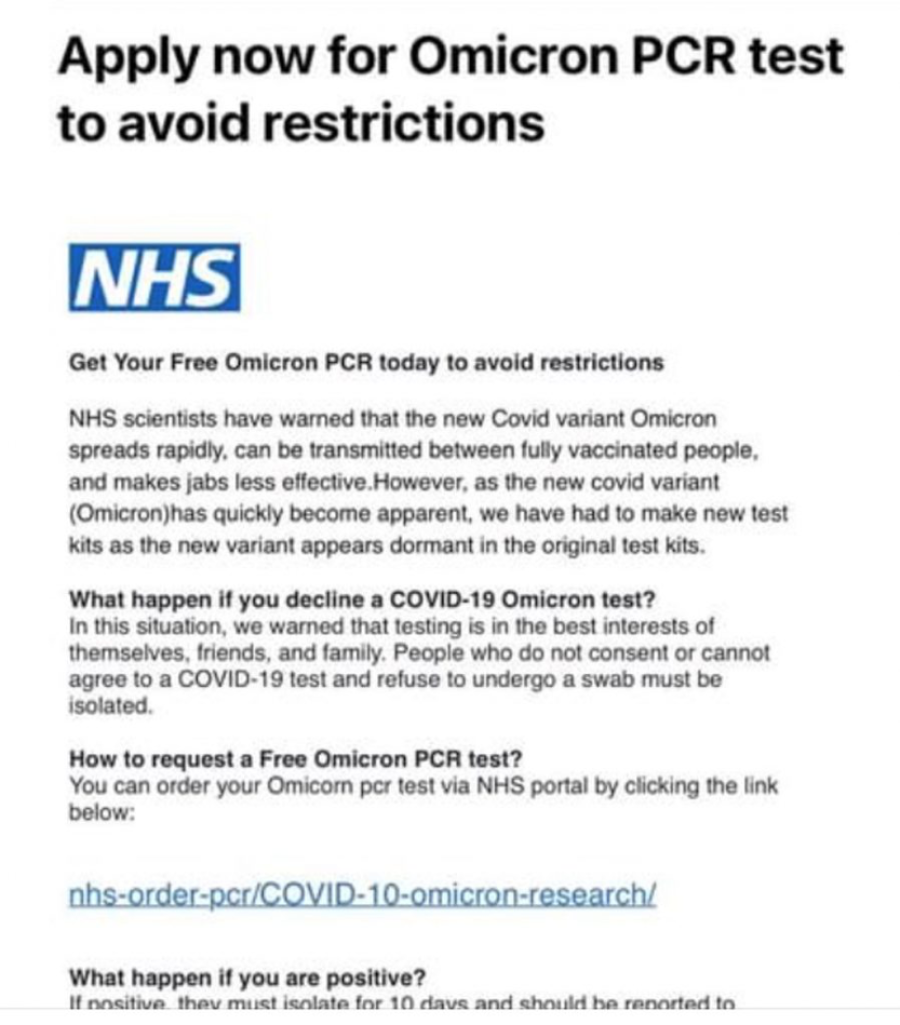
Posing as the NHS, scammers describe how horrible the Omicron virus can be and ask you to order your Omicron PCR test, threatening that if you decline the test, it will potentially be harmful to your loved ones. Here’s an example from Meaghan Kall, an epidemiologist from the UK, that she shared on Twitter:
Scam content
Get Your Free Omicron PCR today to avoid restrictions NHS scientists have warned that the new Covid variant Omicron spreads rapidly, can be transmitted between fully vaccinated people, and makes jabs less effective.However, as the new covid variant(Omicron)has quickly become apparent, we have had to make new test kits as the new variant appears dormant in the original test kits. What happen if you decline a COVID-19 Omicron test? In this situation, we warned that testing is in the best interests of themselves, friends, and family. People who do not consent or cannot agree to a COVID-19 test and refuse to undergo a swab must be isolated. How to request a Free Omicron PCR test? You can order your Omicorn pcr test via NHS portal by clicking the link below: nhs-order-pcr / COVID-10-omicron-research / What happen if you aew positive? If positive, they must isolate for 10 days and should be reported to Public Health England.
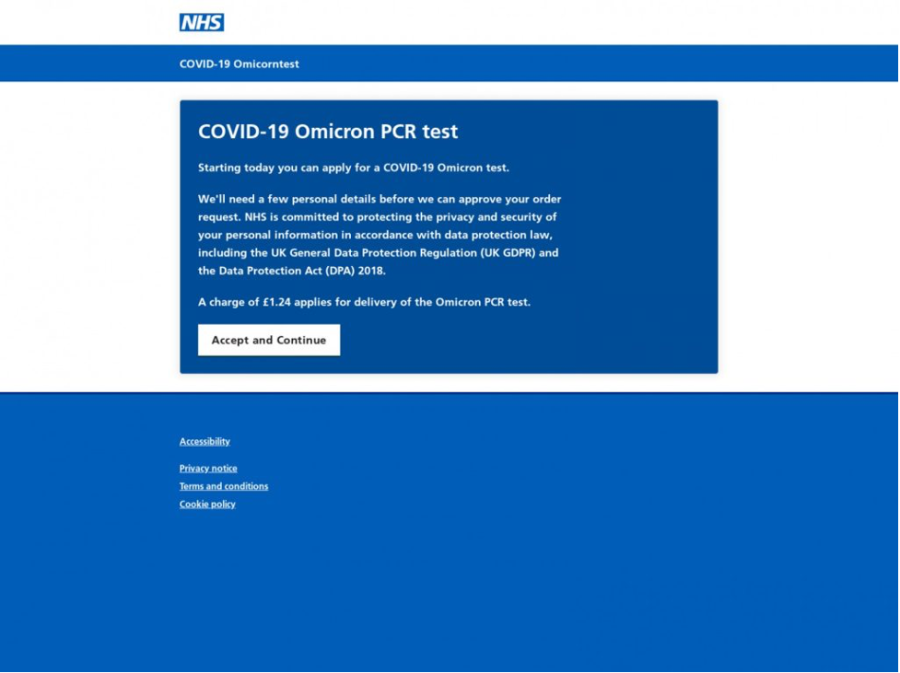
The scammers then instruct you to click on a hyperlink or embedded button in the email. You will be taken to a fake NHS log-in page where you have to submit personal credentials and also credit card details for the delivery of the testing kit.
Source: Which?
Any data entered will end up in the scammers’ hands, and they can use it for identity theft. Don’t fall for it!
How to protect yourself
- Double-check the sender’s email address.
- Take a closer look at the web address. Reach out to the government’s/organization’s official website directly to apply for any program.
- NEVER click on links or attachments from unknown sources. Use Trend Micro Check to combat scams with ease! (It’s 100% FREE).
Trend Micro Check is an all-in-one browser extension for detecting scams, phishing attacks, malware, and dangerous links – and it’s FREE!
After you’ve pinned Trend Micro Check, it will block dangerous sites automatically! It is now available on Safari, Google Chrome, and Microsoft Edge.
Check out this article for more information about Trend Micro Check.
Don’t forget to add an extra layer of protection to your device with Trend Micro Maximum Security! It includes Web Threat Protection, Ransomware Protection, Anti-phishing, and Anti-spam Protection to help you combat scams and cyberattacks. Click the button below to give it a try:
As ever, if you’ve found this article an interesting and/or helpful read, please do SHARE it with friends and family to help keep the online community secure and protected.
Report a Scam!

Have you fallen for a hoax, bought a fake product? Report the site and warn others!
Scam Categories
Help & Info
Top Safety Picks
Your Go-To Tools for Online Safety
- ScamAdviser App - iOS : Your personal scam detector, on the go! Check website safety, report scams, and get instant alerts. Available on iOS
- ScamAdviser App - Android : Your personal scam detector, on the go! Check website safety, report scams, and get instant alerts. Available on Android.
- NordVPN : NordVPN keeps your connection private and secure whether you are at home, traveling, or streaming from another country. It protects your data, blocks unwanted ads and trackers, and helps you access your paid subscriptions anywhere. Try it Today!
Popular Stories
As the influence of the internet rises, so does the prevalence of online scams. There are fraudsters making all kinds of claims to trap victims online - from fake investment opportunities to online stores - and the internet allows them to operate from any part of the world with anonymity. The ability to spot online scams is an important skill to have as the virtual world is increasingly becoming a part of every facet of our lives. The below tips will help you identify the signs which can indicate that a website could be a scam. Common Sense: Too Good To Be True When looking for goods online, a great deal can be very enticing. A Gucci bag or a new iPhone for half the price? Who wouldn’t want to grab such a deal? Scammers know this too and try to take advantage of the fact. If an online deal looks too good to be true, think twice and double-check things. The easiest way to do this is to simply check out the same product at competing websites (that you trust). If the difference in prices is huge, it might be better to double-check the rest of the website. Check Out the Social Media Links Social media is a core part of ecommerce businesses these days and consumers often expect online shops to have a social media presence. Scammers know this and often insert logos of social media sites on their websites. Scratching beneath the surface often reveals this fu
Disclaimer: This article was originally published in 2018 and has been updated in October 2025 to reflect more current information, resources, and advice. Scams and recovery options continue to evolve, so always double-check with your bank, payment provider, or local consumer protection authority for the latest guidance. So the worst has come to pass - you realise you parted with your money too fast, and the site you used was a scam - what now? Well first of all, don’t despair!! If you think you have been scammed, the first port of call when having an issue is to simply ask for a refund. This is the first and easiest step to determine whether you are dealing with a genuine company or scammers. Sadly, getting your money back from a scammer is not as simple as just asking. If you are indeed dealing with scammers, the procedure (and chance) of getting your money back varies depending on the payment method you used. PayPal Debit card/Credit card Bank transfer Wire transfer Google Pay Bitcoin PayPal Good news: PayPal gives you strong protection. You can file a dispute within 180 days of your purchase. You can get a refund if: Your order never arrives, and the seller cannot provide proof of delivery. The scammer sends you something completely different (e.g., a controller instead of a PlayStation). The product condition was misrepresented (sold as new but arrives used). The item is missing undisclosed parts. The item is counterfeit. Start your claim directly through Pay